

Best Tools
to Grow on X
(Twitter) in 2026
Published · Last updated
Here is a pattern that repeats across almost every creator's X journey. You hear about a growth tool. You sign up. You poke around the dashboard for a week. Then it joins the pile of unused subscriptions sitting next to that analytics tracker you forgot to cancel and the thread writer that made you sound like a LinkedIn influencer.
The problem is rarely the tools themselves. It is that nobody explains which jobs actually grow an account on X before recommending products. Without that framework, every new tool feels urgent and none of them stick. This article gives you the framework first: five repeatable daily jobs that compound into real growth. Then it covers the tools worth paying for in each category, so you can build a stack that fits your actual workflow instead of someone else's affiliate list. We build Ghosti, so our bias is obvious, but the decision framework works whether you use our tool or not.
The Daily Jobs That Actually Grow an X Account
Growth on X (Twitter) is not one activity. It is a set of daily jobs, and most creators only do one or two of them consistently. That imbalance is what makes growth feel random even when you are putting in real effort.
After building Ghosti and watching what works for solo creators and founders on the platform, these are the five jobs that move the needle:
- Content creation means writing posts, threads, and reactions that sound like you, not like a template engine. This is the engine. If you cannot produce content consistently, nothing else compounds.
- Reply-led engagement means finding the right conversations and adding something worth reading. Current growth guides emphasize using tools to enhance engagement and streamline workflows. Replies build familiarity, earn profile clicks, and put your name in front of audiences larger than yours.
- Scheduling and consistency means showing up at reliable intervals. Consistency does not require posting constantly, but it does require posting often enough that attention compounds instead of resetting every week.
- Analytics and feedback means knowing what worked, what flopped, and why. Without a feedback loop, you are guessing. With one, every week becomes a better experiment.
- Audience research means understanding who your readers are, what topics resonate right now, and where the conversations in your niche are happening this week.
Think of these as a stack. Creation and engagement sit at the top because they produce the raw output everything else depends on. Scheduling, analytics, and research support and amplify that output. Solving the top two first gives the bottom three something to work with.
How to Create X Content That Actually Sounds Like You
Most creators hit the same wall. They open the compose box, stare at the cursor, and close the tab. Or they paste a topic into a general-purpose chatbot, get back something that reads like a corporate memo, and spend twenty minutes rewriting it into something they would actually post. The creation job has not been solved. It has just been shuffled between tabs.
Good content creation on X has three parts that need to work together: generating ideas, turning those ideas into finished posts, and making those posts sound like a specific human with opinions. Any tool that handles only one part pushes the other two back onto you.
What separates useful creation tools from noise
The tool should produce output that starts close to your voice on the first generation. You should edit for fit, not rewrite from scratch. Ideally, you can create inside X rather than bouncing between a dashboard, a chatbot, and the composer. And the tool should learn from your examples over time, not start cold every session.
Why Ghosti fits this job
Ghosti generates posts, threads, and replies directly inside X's compose experience, so you never leave the feed to write. Ghost DNA stores your tone, topics, examples, products, and custom rules. Each generation starts with your context already loaded, which is the difference between producing generic text and producing your text.
Thread Studio turns a single topic into a full multi-part thread. You pick the post count, review each part, and publish. That collapses the thread-creation job from an hour of outlining and writing into a few minutes of reviewing and editing.
The gap between a general-purpose chatbot and a tool like Ghosti is specificity. A chatbot produces text about a topic. Ghosti produces text in your voice, inside the composer, with your context loaded. That collapses three separate steps (think of an idea, write it in a chatbot, copy-paste into X) into one.
Reply-Led Engagement: The Growth Job Most People Skip
Posting alone does not compound on X. The accounts that grow fastest are almost always strong repliers. A well-placed reply on a high-visibility thread puts your name in front of that creator's entire audience. Do it consistently for a few weeks and you build the kind of familiarity that leads to follows, DMs, and collaborations.
But reply-led growth has a real bottleneck: finding the right tweets to reply to. Scrolling the timeline and hoping something relevant appears is slow, unfocused, and turns into a doomscrolling session more often than a growth session. You need a way to surface high-opportunity posts quickly so your time goes into writing replies, not hunting for them.
What good reply engagement looks like
A strong reply workflow surfaces tweets worth engaging with, helps you write a contextual reply fast, and keeps your voice consistent. The reply should sound like something you would actually type, not a generic compliment or an obviously generated paragraph. Speed matters too. Replying early to a rising thread gives you visibility before the replies pile up.
How Ghosti handles this
Ghosti's Hunt Mode highlights tweets that match your engagement criteria directly in your feed. You see the opportunities without scrolling for them. Reply Guy reads the context of any tweet and generates a reply in one click. You review, edit if you want, and post it yourself.
The combination turns the reply job from a 45-minute scroll into a focused 10-minute habit. Because Ghosti uses your stored context and examples, replies stay consistent with your tone. And because every draft is generated right in the feed in your voice, you can fire off an on-voice reply in seconds without breaking your flow, which helps you stay aligned with X's automation rules. No tool can guarantee against suspension, so reviewing every reply before posting is the most reliable way to reduce risk.
Tip: The highest-ROI reply habit is replying early to rising tweets from accounts larger than yours in your niche. Hunt Mode surfaces these before they blow up, giving you first-mover visibility in the replies.
Scheduling: The Job You Can Solve Cheaply
Consistency is one of the most reliable predictors of growth on X. Current strategy guides recommend posting consistently throughout the day to build momentum, without specifying exact frequency ranges. That volume is difficult to maintain without some form of scheduling.
Scheduling is a separate job from creation. A scheduling tool lets you batch-write content when you have creative energy and distribute it across the day. You still wrote every post. The tool handles timing.
What to look for
A scheduler should let you queue posts and threads, pick posting times or auto-optimize them, and manage a rolling content calendar. It should not require a marketing degree to operate. For most solo creators, basic queue management and time-slot posting is all you need.
Ghosti covers the creation and engagement jobs, not scheduling. If scheduling is your weakest link, pair Ghosti with a dedicated scheduling tool. If creation and engagement are your weak links, fix those first and scheduling becomes easier because you always have content ready to queue. The comparison below covers the scheduling options side by side.
Analytics That Actually Change What You Do
A dashboard full of impression counts is useless unless it changes your next post. Analytics only matter when they feed back into your creation and engagement habits.
A simple weekly analytics habit
Spend 15 minutes once a week. Look at your top three posts by profile visits (not just likes). Identify what they have in common: format, topic, time of day, hook style. Do more of that. Track follower growth over rolling weeks, not daily. If threads outperformed singles, make more threads. If a specific topic drove replies, double down.
X's built-in analytics cover this for most solo creators. Third-party analytics tools earn their subscription once you are posting at volume and need to spot patterns across hundreds of posts. For most people starting out, the free tools are enough.
Ghosti adds a different feedback loop through Boo's XP system. Creating and posting content earns XP that levels up your AI agent through nine stages. It turns consistency into a visible streak, which makes it easier to show up on days when you do not feel like posting. It is accountability disguised as a game.
Audience Research Without a Research Budget
The creators who grow fastest know exactly who they are writing for. Audience research is not a one-time exercise you do before your first post. It is an ongoing habit of noticing which topics earn engagement, which types of followers interact most, and which conversations your niche is having this week.
A no-cost research workflow
Follow 20 active accounts in your niche. Watch what they post, which posts earn replies, and which threads take off. Save the patterns. Use those patterns to shape your own content angle. AI-assisted workflow guides recommend using rapid feedback loops to refine your messaging in real time rather than guessing what your audience wants.
Ghosti contributes here in a concrete way. Ghost DNA stores your niche, interests, products, and examples, giving your generations relevant context from the start. Hunt Mode doubles as research: while surfacing tweets to reply to, it lets you see active conversations in your feed. News Posts let you save keywords in your niche and generate timely reactions to headlines, keeping you relevant without manually scanning news sites every morning.
Ghosti vs Tweet Hunter vs Hypefury vs SuperX: side by side
Here is how Ghosti lines up against Tweet Hunter and Hypefury and SuperX on the dimensions that matter for reply-led growth on X. Every competitor fact below comes from the tool's own official site.
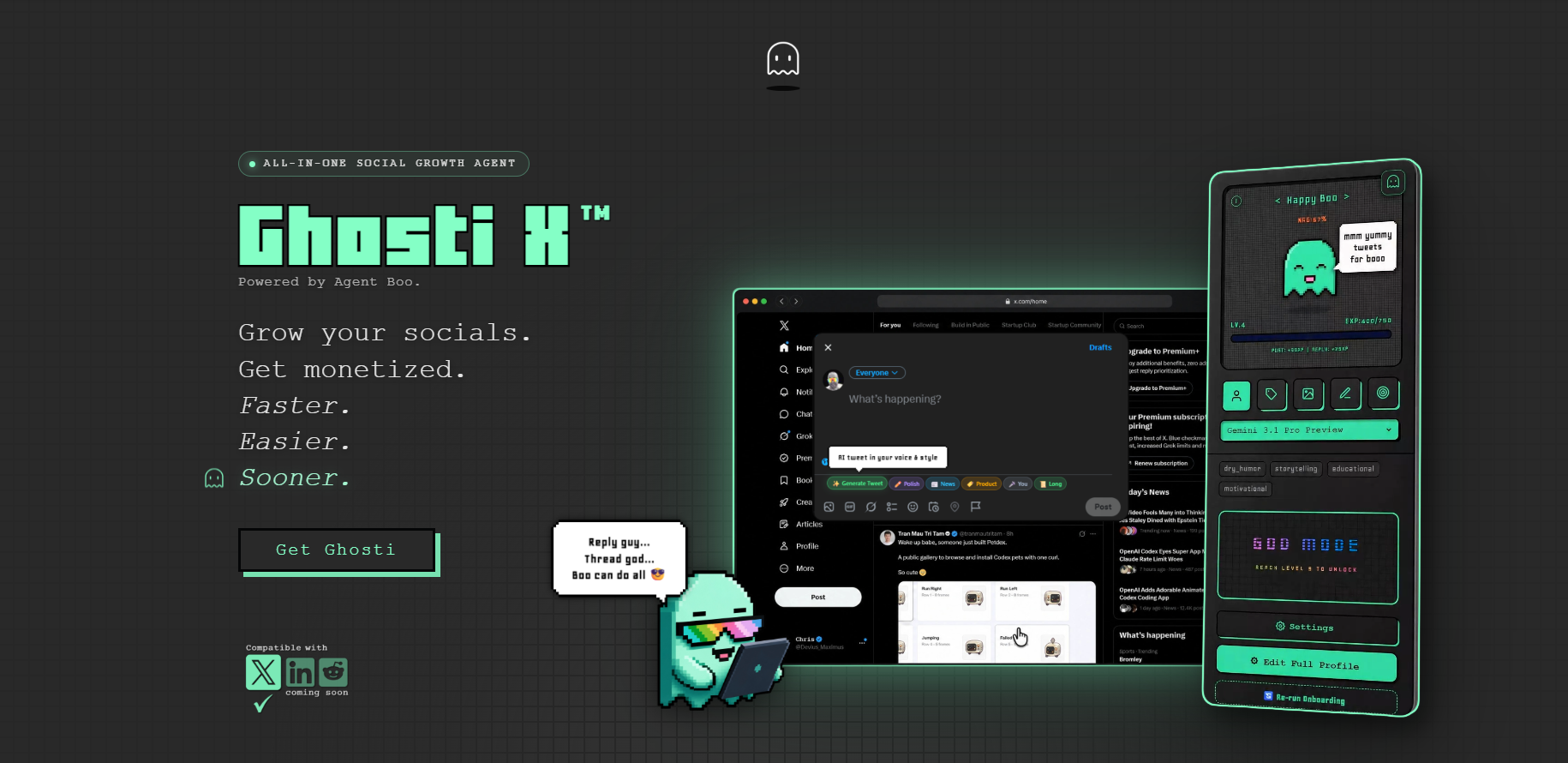
| Feature | Ghosti X | Tweet Hunter | Hypefury | SuperX |
|---|---|---|---|---|
| Type | Live generation agent | All-in-one AI X growth tool | Social scheduling & automation suite | In-X engagement & scheduling suite |
| Writes in your voice | ✓ Yes, trained on your examples | — | — | ✓ |
| Generates replies for reply-led growth | ✓ Yes | — | ✓ | ✓ |
| Builds full threads | ✓ Yes, Thread Studio | ✓ | ✓ | ✓ |
| Finds tweets worth replying to | ✓ Yes, Hunt Mode | — | ✓ | ✓ |
| Works inside the X feed | ✓ Yes, native in the feed | — | — | ✓ |
| BYOK — bring your own AI key | ✓ Yes | — | — | — |
| Starting price | $18.99/month | $49 / month (7-day free trial) | — | $39 / month (Advanced) |
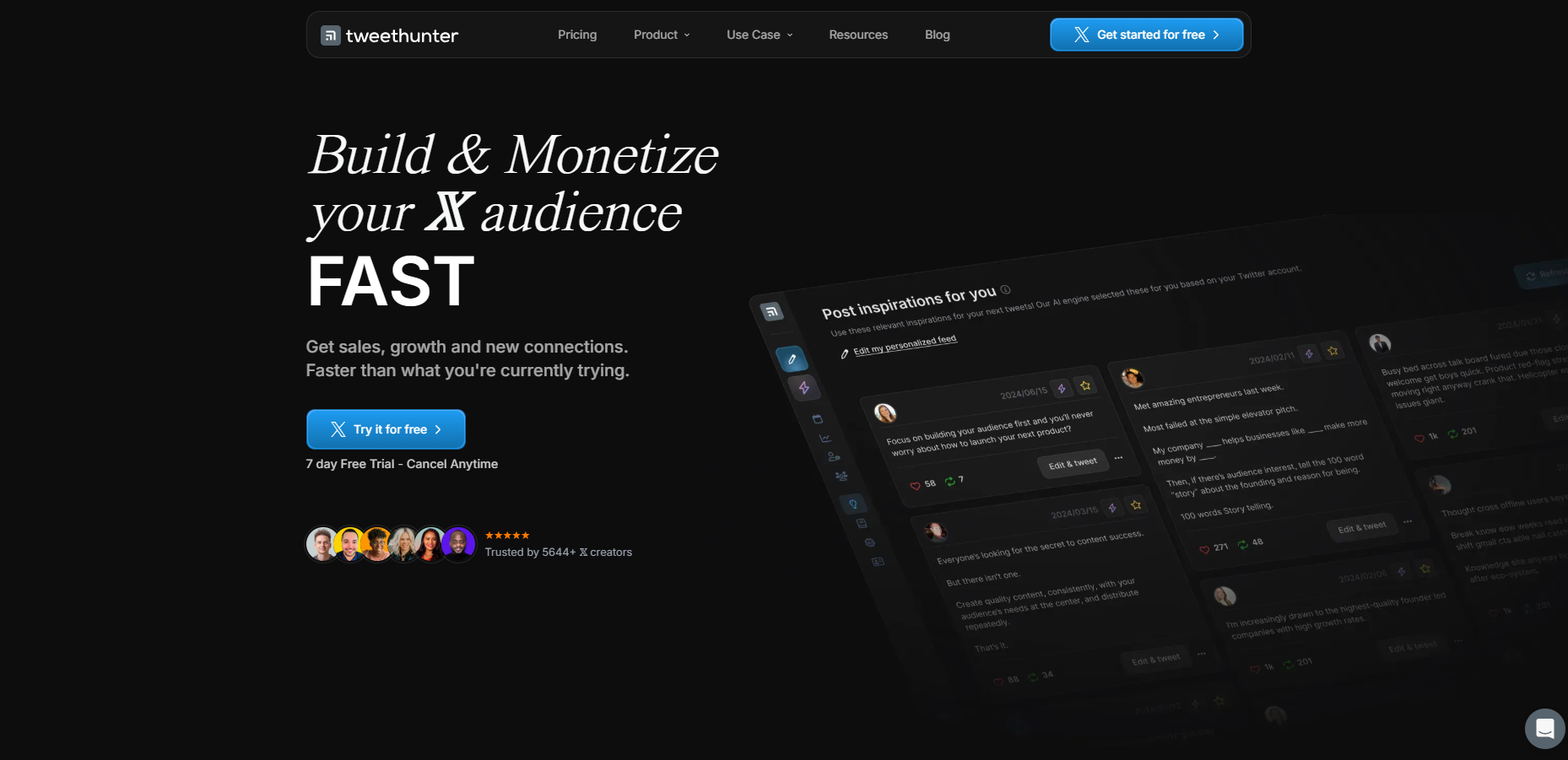
Tweet Hunter is an All-in-one AI X growth tool that builds threads. Pricing: $49 / month (7-day free trial).
Hypefury is a Social scheduling and automation suite that generates replies and builds threads.

SuperX is an In-X engagement and scheduling suite that writes in your voice, generates replies and builds threads. Pricing: $39 / month (Advanced).

The takeaway: Ghosti is the pick for creators who want posts, threads, and replies that sound like them, generated in one click right inside X, running on their own AI key.
Building a Growth Stack That Actually Sticks
You do not need five paid tools on day one. Start with the job you are weakest at and add tools only when you have a clear problem to solve.
If your weakest job is creating content and engaging through replies, start with Ghosti. It generates posts, threads, and replies in your trained voice inside X, with Hunt Mode surfacing the tweets worth replying to and Reply Guy writing the reply in one click. At $18.99 per month or $49.99 per year, plus your own AI provider key (Gemini, OpenAI, Anthropic, or OpenRouter at wholesale rates), it covers the creation and engagement jobs in one Chrome extension. Ghosti needs no X password and makes no third-party connection to your account.
If your weakest job is scheduling, add a dedicated scheduler. Most solo creators only need basic queue management and time-based posting.
If your weakest job is analytics, use X's built-in analytics first. Upgrade to a paid tool only when you are posting at enough volume that manual tracking falls behind.
Tip: The most common mistake is buying infrastructure tools before building the creation habit. A scheduler does nothing if you have nothing to schedule. Start with creation and engagement. Add infrastructure later.
The strongest growth stack is usually just two or three focused tools: one for the high-friction work (writing and replying), one for distribution timing, and your own analytics review habit. Ghosti is designed to collapse the hardest daily jobs into one extension so the rest of your stack can stay simple and cheap.
Key takeaways
- Growth on X comes from five daily jobs: creating, replying, scheduling, analyzing, and researching. Match tools to jobs instead of collecting features.
- Content creation and reply-led engagement are the highest-friction jobs for most solo creators. Solve those first and the rest gets easier.
- Ghosti generates posts, threads, and replies in your trained voice inside X. Hunt Mode surfaces the tweets worth replying to, and you choose your own AI provider and model.
- Scheduling, analytics, and audience research are important but lower-friction. Free or simple tools cover them until volume demands more.
- Start with one tool for your weakest job. A two or three tool stack beats a graveyard of twelve subscriptions.
Frequently asked questions
How many tools do I need to grow on X?
Most solo creators can start with one tool that covers content creation and engagement, then add a scheduler or analytics dashboard later as posting volume increases. Two or three focused tools usually outperform a dozen overlapping subscriptions. Start with the job you are weakest at.
What does it mean to bring your own AI key?
Some tools let you connect your own API key from an AI provider such as Gemini, OpenAI, Anthropic, or OpenRouter instead of bundling AI costs into a flat subscription. Ghosti uses this model, giving you the flexibility to pick your preferred provider and model while paying the provider directly for usage.
Can AI tools for X get my account suspended?
Creators widely observe that tools automating unsolicited replies or using non-API scripting tend to carry real risk of enforcement action. In practice, tools like Ghosti that generate content for you to review and post yourself tend to keep you on the right side of the platform's expectations, though no tool can guarantee against suspension.
Sources
- X Automation Rules (accessed June 22, 2026)
- Tweet Hunter (official site) (accessed June 22, 2026)
- Hypefury (official site) (accessed June 22, 2026)
- SuperX (official site) (accessed June 22, 2026)
Editorially reviewed by Chris, Ghosti Founder on .