

Best
Twitter AI
Agent for X in 2026
Published · Last updated
Search for a "Twitter AI agent" today, and you'll find a confusing mix of open-source coding projects, autonomous bots that risk getting you banned, and generic marketing apps. Many creators experiment with these tools hoping to grow their audience on autopilot, only to end up with a timeline full of robotic posts that no one interacts with. If you're tired of blank-page paralysis but don't want to hand your account over to a generic bot, you need to understand the different types of AI agents available, and which one actually fits your workflow.
The 4 Types of Twitter AI Agents
The term "AI agent" means wildly different things depending on who you ask. Here is the practical taxonomy of what is actually available for X today:
- Autonomous bots: Tools that automatically post entirely on their own. While hands-off, these carry real account suspension risks if they violate X's automation policies.
- Open-source agent frameworks: Developer tools (like ElizaOS) that let you build and host your own AI agent from scratch.
- API pipes: Plumbing tools (like OpenTweet) that let custom agents publish to X without official API keys.
- In-feed writing agents: AI assistants that live inside your X feed to generate on-voice posts and replies, requiring human approval before anything is published.
Comparing the Top AI Agents for X
When comparing your options, the right choice depends entirely on your technical skills and growth goals. Let's look at how the leading approaches stack up. To make a decision, evaluate whether you value technical customizability, scheduling plumbing, or an immediate focus on authentic writing and audience growth. Choosing the wrong category can lead to wasted development time or, worse, restricted account reach.
If you are a developer looking to build a self-hosted, autonomous agent, frameworks like ElizaOS provide a powerful open-source foundation. The primary advantage here is total control over the underlying logic. However, the trade-off is significant: you will need to write code, host the agent yourself on a server, and manage your own Twitter API keys. Maintenance becomes your responsibility. Similarly, if you want a general AI agent that can operate across multiple apps, OpenClaw is a highly capable self-hosted option, though you'll need to manually wire it up to X using an integration, which adds another layer of complexity to your stack.
For tinkers trying to bypass official API restrictions, tools like OpenTweet act as scheduling plumbing and also offer AI writing capabilities. These are useful if you are prioritizing automated distribution over native engagement.
However, if you are a creator or founder whose primary goal is building an authentic audience, these developer tools are the wrong fit. You don't need to build an agent from scratch; you need a ready-to-use writing assistant that understands your brand and eliminates the friction of daily posting.
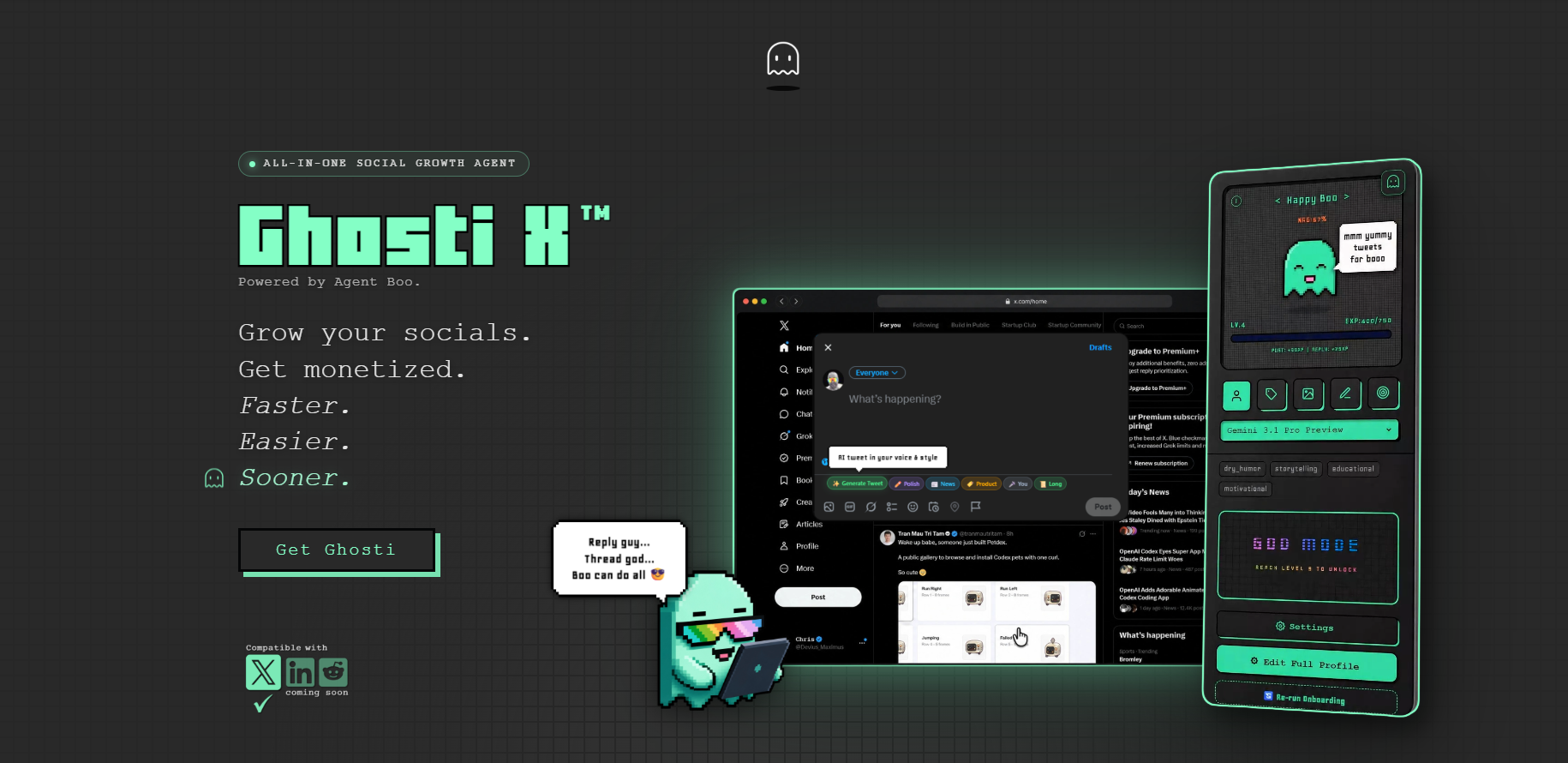
This is where Ghosti comes in. Instead of forcing you to code or host anything, Ghosti is an in-feed writing agent designed specifically for X creators. It generates posts in one click, directly where you already work. Most importantly, it uses Ghost DNA to learn your specific tone and rules, helping the output sound like your unique voice based on your settings and rules. This solves the common problem of AI content sounding generic. Ghosti also focuses heavily on reply-led growth: Hunt Mode surfaces high-opportunity tweets in your niche, while Reply Guy drafts the perfect response, making it incredibly easy to participate in conversations, a critical driver of account growth.
Unlike autonomous bots, Ghosti never posts without your approval and never requires your X password, keeping you firmly in control of your account and mitigating the risk of policy violations.
What Makes an Agent Actually Work
The most successful creators don't use AI to replace themselves; they use it to remove friction. An effective Twitter AI agent should amplify your unique perspective, not drown it out with viral templates. Evaluating an agent based on its ability to preserve your authenticity is essential.
Growth on X is driven by consistency and authentic engagement. By using an agent that learns your voice and helps you discover the right conversations, you can maintain a high posting cadence without the usual cognitive fatigue. The key is to choose a tool that fits naturally into your workflow rather than one that requires you to change how you work.
Ghosti vs the agent tools: where each fits
Here is how Ghosti compares to the actual agent tools, ElizaOS, OpenClaw, and OpenTweet, using only what each tool says about itself.
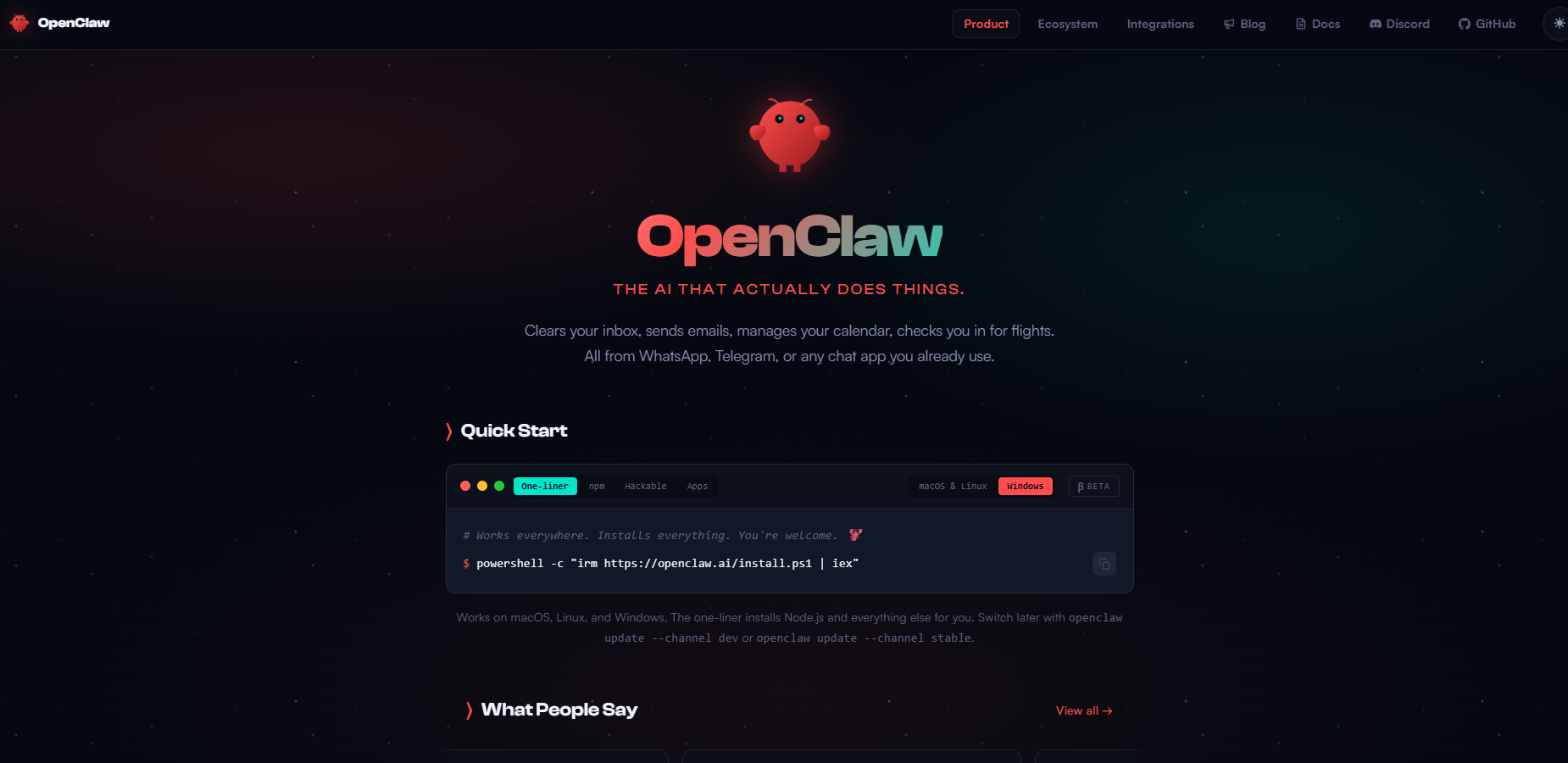
ElizaOS and OpenClaw are open-source agent frameworks, not ready products. ElizaOS is a leading open-source framework for building AI agents; OpenClaw is a hugely popular self-hosted assistant (200,000+ GitHub stars) that runs on your own hardware and works with any major LLM. Both are powerful and endlessly customizable, but they are code. You set them up, host them, plug in your own API keys, and maintain them, and they are designed to run autonomously. For a developer, that is the appeal. For a creator who just wants to post and reply in their own voice, it is a project, not a tool. And because an autonomous agent posts and replies on its own through your account, that setup carries the account-suspension risk X spells out in its automation policy.

OpenTweet is infrastructure, not a writer. It is a posting REST API and scheduler that lets agents publish to X, and it pairs with tools like OpenClaw, LangChain, and n8n. It is the plumbing an agent uses to post, you would still need to build the agent that decides what to actually say.

Ghosti is the ready, voice-first option. It installs as a one-click Chrome extension and generates posts, threads, and replies directly inside the X feed, trained on your own writing through Ghost DNA, no code, no hosting, no maintenance. Hunt Mode surfaces the conversations worth replying to and drafts the reply in your voice, which is where most early growth on X actually comes from. It is BYOK, so you bring your own model key with no markup, and it never needs your X password.
The trade-off is simple: the frameworks give a developer the power to build a fully custom autonomous agent; Ghosti gives a creator a finished, on-voice tool that works in the feed today.
Key takeaways
- Twitter AI agents range from complex open-source developer frameworks to ready-to-use writing assistants.
- Autonomous bots carry account risks, while human-approved writing agents prioritize safety and authenticity.
- Ghosti is an in-feed AI writing agent that learns your unique voice and helps you discover high-value reply opportunities.
- The best AI workflow combines consistent, voice-trained generation with active participation in timeline conversations.
Frequently asked questions
Can I get banned for using an AI agent on Twitter?
X's automation rules prohibit spammy behavior and automating mentions or replies on an unsolicited basis. Using an AI writing assistant to help you draft posts and replies that you manually review and publish is standard practice. Ghosti minimizes risk by never auto-posting and never requiring your X password.
What is the difference between an AI agent and a scheduler?
A scheduler simply publishes content you have already written at a specific time. An AI agent actively helps you generate the content, often learning your voice and surfacing relevant conversations to reply to.
Is Ghosti a Twitter AI agent?
Yes, Ghosti is a live generation agent for X. It generates posts, threads, and replies in your voice directly in the feed. Unlike open-source agent frameworks, it is a one-click extension, not code you set up and host yourself.
Are open-source Twitter AI agents safe to use?
They carry real trade-offs. Because they post and reply autonomously through your account, that behavior can run into X's automation policy, and they require setup, hosting, and ongoing maintenance to run.
Sources
- X automation rules (accessed June 23, 2026)
- ElizaOS (official site) (accessed June 23, 2026)
- OpenClaw (official site) (accessed June 23, 2026)
- OpenTweet (official site) (accessed June 23, 2026)
Editorially reviewed by Chris, Ghosti Founder on .