

Best
Twitter Automation
Tool for X in 2026
Published · Last updated
You already know what grows an X account: post consistently, reply to the right conversations, and sound like an actual person doing it. The problem is doing all of that every day without burning out or sounding like a bot. Most "automation" tools solve part of it. Schedulers queue your pre-written posts. Bundled-AI tools spit out generic text you still have to rewrite. And the tools that promise to do everything tend to cost $80+/month and still don't sound like you.
So what does the best Twitter automation tool actually look like in 2026? Not just a scheduler. Not just a chatbot with a "tweet" button. Something closer to an agent: it finds the conversations, generates the content in your voice, and works where you already are. That's the lens we'll use here.
What "automation" actually means on X now
The phrase tweet automation covers a wide spectrum on X, and lumping everything together is how people end up buying the wrong tool.
At the basic end, you have scheduling. Write your tweets in advance, pick times, and a tool publishes them. Established scheduling tools have done this for years. It saves time, but it doesn't help you figure out what to write or handle the engagement side (replies, conversations, building relationships in threads).
Next up: AI-assisted writing. Tools in this tier generate tweet copy for you, usually from a prompt or a trending-topic feed. The catch is most of them use a generic model or a library of "viral" templates, so the output sounds like everyone else's output. You still spend time rewriting.
Then there's what's emerging as agentic automation: tools that don't just generate content but actively surface opportunities (which tweets to reply to, which topics are trending in your niche) and produce voice-matched output you can publish in one click. The tool does the legwork; you make the final call.
Here's a practical framework for evaluating any tool on this spectrum:
- What does it automate? Scheduling only? Content creation? Engagement and reply discovery? The more of the workflow it covers, the less manual work you do.
- How does it handle your voice? Generic templates, a viral-tweet library, or training on your actual writing examples? This determines whether you'll spend 5 minutes or 25 minutes editing each post.
- Where does it work? A separate dashboard means copy-paste. An in-feed extension means you generate, review, and post without leaving X.
- What's the real cost? All-in-one suites with bundled AI generally sit somewhere between $39 and $99 a month, and the AI is metered, you get a credit allowance, not unlimited generation. Some tools instead offer a bring-your-own-key (BYOK) option, where you connect your own AI provider and pay them directly for usage.
Run any tool you're considering through those four questions and you'll cut through the marketing fast.
Why replies matter more than you think
Most people think about automation as "schedule more posts." That's half the picture. Replies are where a huge chunk of growth actually happens on X, and they're the part most creators automate last (or never).
X published its For You recommendation algorithm, and P(reply) sits in the list of actions the ranking model predicts for every candidate post, alongside likes, reposts, quotes, clicks, profile clicks and dwell. The repo describes the final score as a weighted combination of those predictions. So replies are counted, and counted directly.
What the repo does not publish is the magnitudes. Which means the numbers that get passed around on X, "replies count 15x more than likes" and its cousins, cannot be verified against anything X has actually released, and any tool marketing that quotes one is quoting a guess. The honest version is narrower and more useful: creators widely observe that a daily reply habit on relevant accounts compounds over weeks in a way that broadcasting alone does not.
The practical play looks something like this: pick a focused list of accounts whose followers overlap with your target audience. Set a couple of short daily windows and aim for a manageable batch of thoughtful replies. Consistency matters more than volume. A handful of strong replies every day beats a frantic burst followed by silence.
Tip: Measure reply ROI with profile clicks and new follows over a few weeks, not reply likes. A reply that got zero likes but sent three people to your profile did its job. These are metrics most creators track directly.
The problem, of course, is that maintaining a daily reply habit is boring and time-consuming. You have to scroll through your feed hunting for the right conversations, come up with something worth saying, and type it out, over and over. That's exactly where the right automation tool earns its keep: not by spamming replies, but by surfacing the conversations worth joining and generating a reply that actually sounds like you.
How to write replies worth stopping for
X's recommendation model also predicts dwell time and profile clicks as engagement signals. Many creators report that replies carrying a specific detail, a real counter-take, or a short story tend to generate more profile visits than quick "great post!" one-liners. Makes sense: if someone stops scrolling to actually read your reply, there's a reason they clicked your name afterward.
So what makes a reply worth stopping for?
- A specific angle only you'd have. Say you're a founder building a SaaS tool and you reply to a 50k-follower marketer's thread about content distribution with a concrete detail from your own launch. That's not something an AI template could produce on its own.
- A genuine counter-take. Not contrarian for clicks, just a different perspective backed by something real.
- Brevity with substance. Two sentences that add information beat five sentences of agreement.
This is also where voice quality becomes non-negotiable. A generic AI reply reads like filler. A reply that matches how you actually write, your tone, your sentence rhythm, your sense of humour, reads like a person showed up. That's the difference between a reply someone scrolls past and one that earns a profile click.
Why Ghosti fits the agentic end of the spectrum
Ghosti sits at the agentic end of the automation spectrum we outlined earlier. Here's what that means in practice.
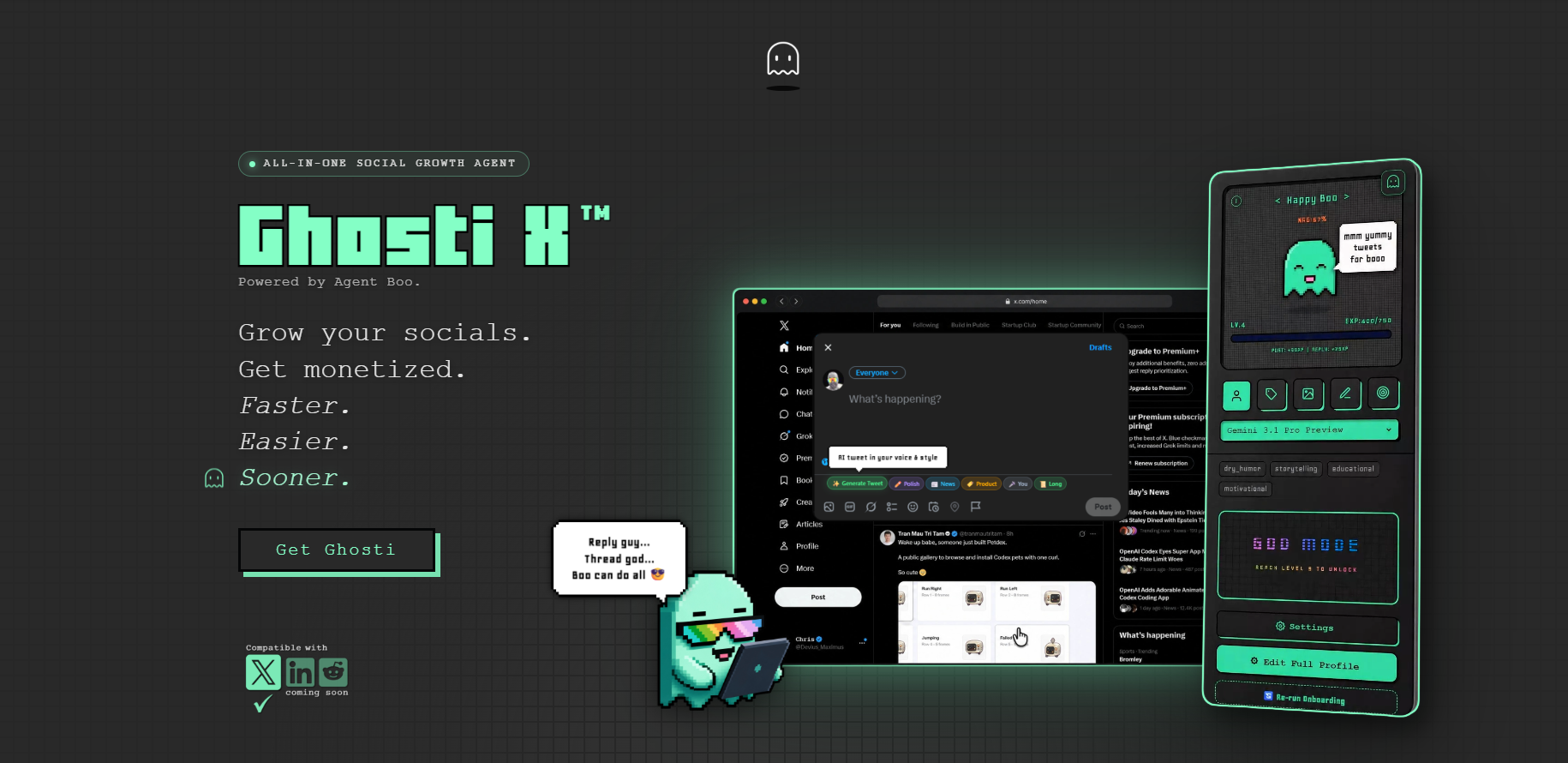
Hunt Mode surfaces the tweets worth replying to. Instead of scrolling your whole feed looking for conversations, Hunt Mode highlights and filters the tweets that match what you care about. You focus your reply effort where it matters.
Reply Guy generates a contextual reply. According to Ghosti's website, it reads the tweet, understands the context, and produces a draft reply. You review it, edit as needed, and post.
Post generation and Thread Studio handle the content side. Need a standalone post? Ghosti generates one using your saved interests and niche topics. Need a thread? Thread Studio turns a single idea into a multi-part thread you can review and refine. Post generation happens right in the X compose box; Thread Studio runs in the Ghosti sidebar, where you check each part before it goes out.
Ghost DNA is what makes the voice work. During setup, you feed Ghosti your bio, tone, writing examples, products, and custom rules. It learns how you communicate, not just what topics you cover. That's the difference between "AI that writes tweets" and "AI that writes tweets that sound like they came from your account."
Ghosti uses a bring-your-own-key (BYOK) model. According to Ghosti's website, you connect your own API key from a supported AI provider and pay that provider directly rather than buying bundled credits. The licence itself is $18.99/month or $49.99/year; model usage is billed by your provider on top, at their rates.
Everything runs inside the X feed. There is no separate dashboard and no second tab to keep open. Standalone posts and replies land straight in the composer; thread parts you carry across from the sidebar as you publish them. It connects to X without needing your password or any dodgy third-party account connection.
And then there's Boo, the AI agent mascot with an XP system. Your posting activity earns XP and evolves Boo through progressive stages. It's a small thing, but it makes the daily consistency feel like progress instead of a grind. Think Tamagotchi accountability for your posting habit.
Ghosti vs Tweet Hunter vs Hypefury vs SuperX: side by side
Here is how Ghosti lines up against Tweet Hunter and Hypefury and SuperX on the dimensions that matter for reply-led growth on X. Every competitor fact below comes from the tool's own official site.
| Feature | Ghosti X | Tweet Hunter | Hypefury | SuperX |
|---|---|---|---|---|
| Type | Live generation agent | All-in-one AI X growth tool | Social scheduling & automation suite | In-X engagement & scheduling suite |
| Writes in your voice | ✓ Yes, trained on your examples | — | — | ✓ |
| Generates replies for reply-led growth | ✓ Yes | — | ✓ | ✓ |
| Builds full threads | ✓ Yes, Thread Studio | ✓ | ✓ | ✓ |
| Finds tweets worth replying to | ✓ Yes, Hunt Mode | — | ✓ | ✓ |
| Works inside the X feed | ✓ Yes, native in the feed | — | — | ✓ |
| BYOK — bring your own AI key | ✓ Yes | — | — | — |
| Starting price | $18.99/month | $49 / month (7-day free trial) | — | — |
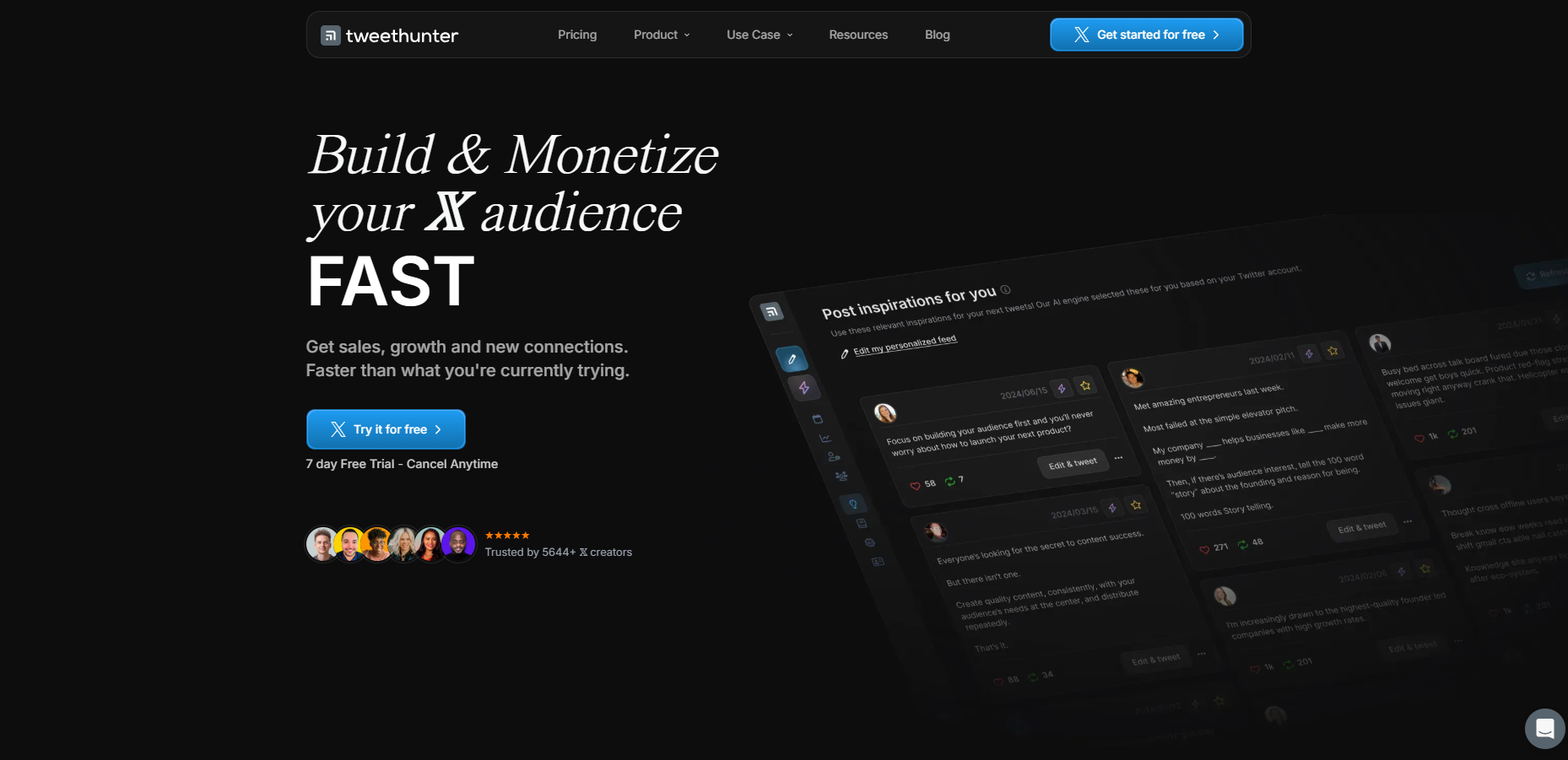
Tweet Hunter is an all-in-one AI growth tool for X that builds threads. Pricing: $49 / month (7-day free trial).
Hypefury is a social scheduling and automation suite that generates replies and builds threads.

SuperX is an in-X engagement and scheduling suite that writes in your voice, generates replies and builds threads.

The takeaway: Ghosti is the pick for creators who want posts, threads, and replies that sound like them, generated in one click right inside X, running on their own AI key.
Picking the right tool for your workflow
After looking at the comparison above, here's a simple way to think about what fits:
If your main bottleneck is scheduling pre-written content across multiple platforms, a scheduling suite does the job. You already know what to write; you just need it posted at the right times.
If your bottleneck is not knowing what to write, not having the time to reply, or sounding generic when you use AI, you need something further along the automation spectrum. You need a tool that generates in your voice, surfaces conversations, and works where you already are.
Ghosti is built for that second group. Creators, indie hackers, founders, and solopreneurs growing on X who want an agent that does the legwork without making them sound like everyone else. It generates posts, threads, and replies that actually sound like you, surfaces the tweets worth replying to, runs on your own AI key, and lives inside the X feed.
If you want a broad multi-network scheduling suite with deep enterprise analytics and team workflows, that's a different job. Ghosti is a focused, affordable in-feed agent for X.
Key takeaways
- Twitter (X) automation ranges from basic scheduling to AI-assisted writing to agentic tools that surface opportunities and generate content you review before posting.
- X's published algorithm lists the reply as one of the actions its ranking model predicts, but it publishes no weights, so treat any tool that quotes a "replies are worth 15x" figure with suspicion.
- The best automation tool for creators generates in your trained voice, not from generic templates or a viral-tweet library.
- Ghosti combines Hunt Mode (reply discovery), Reply Guy (contextual replies), post and thread generation, and Ghost DNA (voice and personality setup) inside the X feed.
Frequently asked questions
Is Twitter automation allowed on X?
<p>X permits some automation when it complies with the <a href="https://help.x.com/en/rules-and-policies/x-automation">X Rules and automation policies</a>. What's prohibited includes non-API-based scripting of the X website, automated unsolicited mentions or replies at scale, and spammy or duplicative use of mentions. Legitimate automation tools that work within these rules are allowed. Always review X's current automation policy before choosing a tool.</p>
What is a BYOK (bring your own key) automation tool?
<p>A BYOK (bring your own key) tool lets you connect your own API key from an AI provider rather than relying on bundled AI credits from the tool itself. According to <a href="https://ghostiapp.com/">Ghosti's website</a>, this model lets you choose your preferred AI provider and pay them directly. Ghosti uses the BYOK model at $18.99/month or $49.99/year for the license.</p>
Can an AI automation tool sound like me on Twitter?
<p>It depends on how the tool handles personalization. Tools that generate from a library of viral templates or generic prompts tend to produce output that sounds like everyone else's. According to <a href="https://ghostiapp.com/">Ghosti's website</a>, its Ghost DNA system lets you provide your own writing examples, tone, and rules, so the generated posts start closer to how you actually write. You still review everything before posting.</p>
Sources
- X automation rules (accessed July 27, 2026)
- X open-source recommendation algorithm (For You feed) (accessed July 27, 2026)
- Tweet Hunter (official site) (accessed July 27, 2026)
- Hypefury (official site) (accessed July 27, 2026)
- SuperX (official site) (accessed July 27, 2026)
Editorially reviewed by Chris, Ghosti Founder on .