

Is
Tweet Hunter
Worth It in 2026?
Published · Last updated
You land on Tweet Hunter's pricing page, see the number, and do what every bootstrapping founder does: open a new tab and search "is tweet hunter worth it."
Fair question. A tool that costs real money every month needs to earn its place in a workflow that already has too many subscriptions and not enough hours. The problem is most "is it worth it" posts just list features. That tells you nothing. Features don't grow your account. What grows your account is consistently showing up in conversations that matter, sounding like yourself when you do, and not burning time on the process.
So instead of a feature checklist, let's talk about the actual jobs an X growth tool needs to do, how to evaluate whether any tool (Tweet Hunter included) is earning its spot, and where we think the real value gap is in 2026.
The four jobs your X tool needs to do
Before you evaluate any tool, get clear on the jobs that actually move the needle on X. Not "features" in the abstract. Jobs. Things you need done, repeatedly, without burning out.
Job 1: Write posts that sound like you
This is the one most tools get wrong. They generate text. Sure. But the output reads like a motivational poster crossed with a LinkedIn post from years past. You paste it, stare at it, rewrite much of it, and wonder why you're paying for this.
The job isn't "generate text." The job is "generate text that sounds like me, in my voice, about my topics, so I can review it and hit post." If you're spending more time editing the AI's output than you'd spend writing from scratch, the tool is costing you time, not saving it.
Job 2: Reply-led growth
Posting alone doesn't grow an account. Replies do. By most accounts, X's recommendation algorithm tends to prioritize posts with specific engagement actions like replies. It seems to predict the probability of a reply as one of the engagement signals its ranking model uses to score posts. It also predicts dwell time, profile clicks, reposts, and follows. Replies aren't a growth hack. They're a signal X's own algorithm seems to measure.
But replying consistently is brutal. You have to find the right conversations (relevant to your niche, not just big accounts), get there early, and write something specific enough to make someone stop scrolling and click your profile. That's a daily habit, not a one-time effort. Creators who stick with it tend to see compounding returns over time. The metric to watch is profile visits and follows, not likes on the reply itself.
A practical cadence that tends to work involves short windows a day, focused on a list of accounts whose followers overlap with your target audience. Catch their posts early. Say something only you'd say. Do it consistently. That's the job.
Job 3: Workflow speed
If using the tool means opening a separate dashboard, writing there, copying text, switching to X, pasting, and formatting, you've added friction to something that should be frictionless. The best workflow is zero tab-switching: you see a post worth replying to, you reply. You feel like writing, you write. No copy-paste tax.
Job 4: Cost efficiency
An X growth tool is an investment. The question isn't "is $X/month a lot?" It's "does $X/month plus my time produce more growth than $X/month plus my time spent somewhere else?" If the AI is good enough that you barely edit it, the tool earns its cost quickly. If you're rewriting everything, the subscription is dead weight.
Where Tweet Hunter fits
Tweet Hunter is an X growth suite with AI tweet generation, automation, and a lead CRM. For established creators and solo marketers who want all of those functions under one roof and can justify the spend, it's a serious option.
But "serious option" and "worth it for you" aren't the same question.
Some creators find that the AI output tends to sound generic and template-ish. That's a common tension: Tweet Hunter gives you a massive content library and viral-post inspiration, but the AI often produces text you'd need to substantially rewrite before it sounds like your voice. For some people, that inspiration-plus-editing workflow is fine. For others, it defeats the purpose of paying for AI writing.
The other factor is cost. The full AI experience on Tweet Hunter sits on higher-tier plans. If you're a bootstrapper or indie hacker, the monthly spend adds up, especially when the AI output still needs heavy editing. You're paying a premium for a suite and CRM you may not need, bundled with AI that doesn't quite nail the one job you actually hired it for.
None of this makes Tweet Hunter bad. It makes it a tool designed for a specific user: someone who wants the full suite, values the content library for ideas, and doesn't mind editing AI output to match their voice. If that's you, it can work. If what you care most about is sounding like yourself with minimal editing, you'll likely feel underserved.
How to actually evaluate "worth it"
Here's a framework you can use on any tool, not just Tweet Hunter or Ghosti.
Open your X analytics. Ask three questions:
- How consistently did I actually publish? If you publish infrequently, your biggest problem is consistency, not features. You need a tool that makes posting so low-friction you actually do it.
- How often did I reply to other people's posts? If you rarely reply, you're leaving the highest-leverage growth channel on the table. You need a tool that makes replying easy and helps you find the right conversations.
- How much time did I spend editing AI output? If you spend significant time editing AI output per post, your AI tool is a draft generator, not a writing agent. The gap between "generated" and "published" is where your time disappears.
"Worth it" means: the tool closes the gap on whichever of those three questions is weakest. An AI writing tool is worth it if it actually writes in your voice. A reply tool is worth it if it surfaces conversations and helps you respond faster.
Most people searching "is tweet hunter worth it" have a posting and voice problem. They want to show up consistently, sound like themselves, and grow. That's the lens to evaluate through.
Why we'd pick Ghosti instead
We build Ghosti, so take this with the appropriate grain of salt. But here's the honest case.
Ghosti is built around the first two jobs: writing in your voice and growing through replies. Ghost DNA learns from your own examples, rules, tone, and topics, so the generated output starts close to how you actually write. Not remixed viral templates. Your voice. The editing step shrinks from "rewrite everything" to "tweak a word or two and post."
For replies, Hunt Mode surfaces the posts in your feed that are worth replying to. Reply Guy reads the context of the tweet and generates a reply. The whole thing happens inside the X feed, in the Chrome extension sidebar. No dashboard. No tab switching. No copying and pasting. You scroll, you see a post worth engaging with, you hit Reply Guy, you review, you post.
The Ghosti license itself is a set price, and you pay the AI provider directly for usage. Compare that to many bundled-AI tools where the subscription price includes a metered, capped AI allocation.
Tip: If you spend significant time editing AI output per post, that's the clearest sign you need a voice-trained tool, not a bigger content library. Ghost DNA closes that gap because it learns from your writing, not a generic template bank.
Ghosti vs Tweet Hunter vs Typefully vs Hypefury: side by side
Here is how Ghosti lines up against Tweet Hunter and Typefully and Hypefury on the dimensions that matter for reply-led growth on X. Every competitor fact below comes from the tool's own official site.
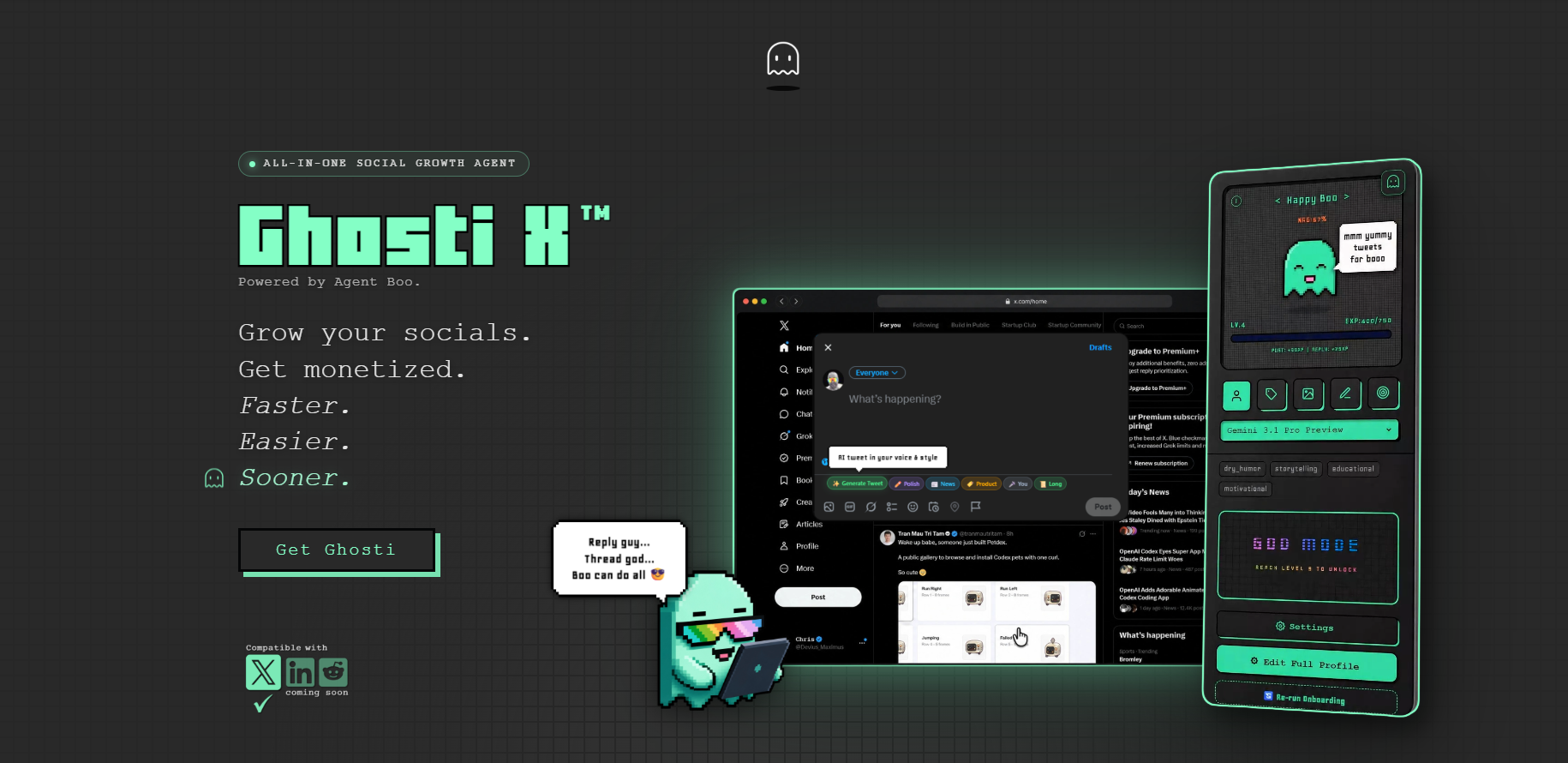
| Feature | Ghosti X | Tweet Hunter | Typefully | Hypefury |
|---|---|---|---|---|
| Type | Live generation agent | All-in-one AI X growth tool | Social publishing & scheduling for X | Social scheduling & automation suite |
| Writes in your voice | ✓ Yes, trained on your examples | ✓ | — | — |
| Generates replies for reply-led growth | ✓ Yes | — | — | ✓ |
| Builds full threads | ✓ Yes, Thread Studio | ✓ | ✓ | ✓ |
| Finds tweets worth replying to | ✓ Yes, Hunt Mode | — | — | ✓ |
| Works inside the X feed | ✓ Yes, native in the feed | — | — | — |
| BYOK — bring your own AI key | ✓ Yes | — | — | — |
| Starting price | $18.99/month | $49 / month (7-day free trial) | Free plan; paid from $8 / month (Starter) | $29 / month (Starter; 7-day free trial) |
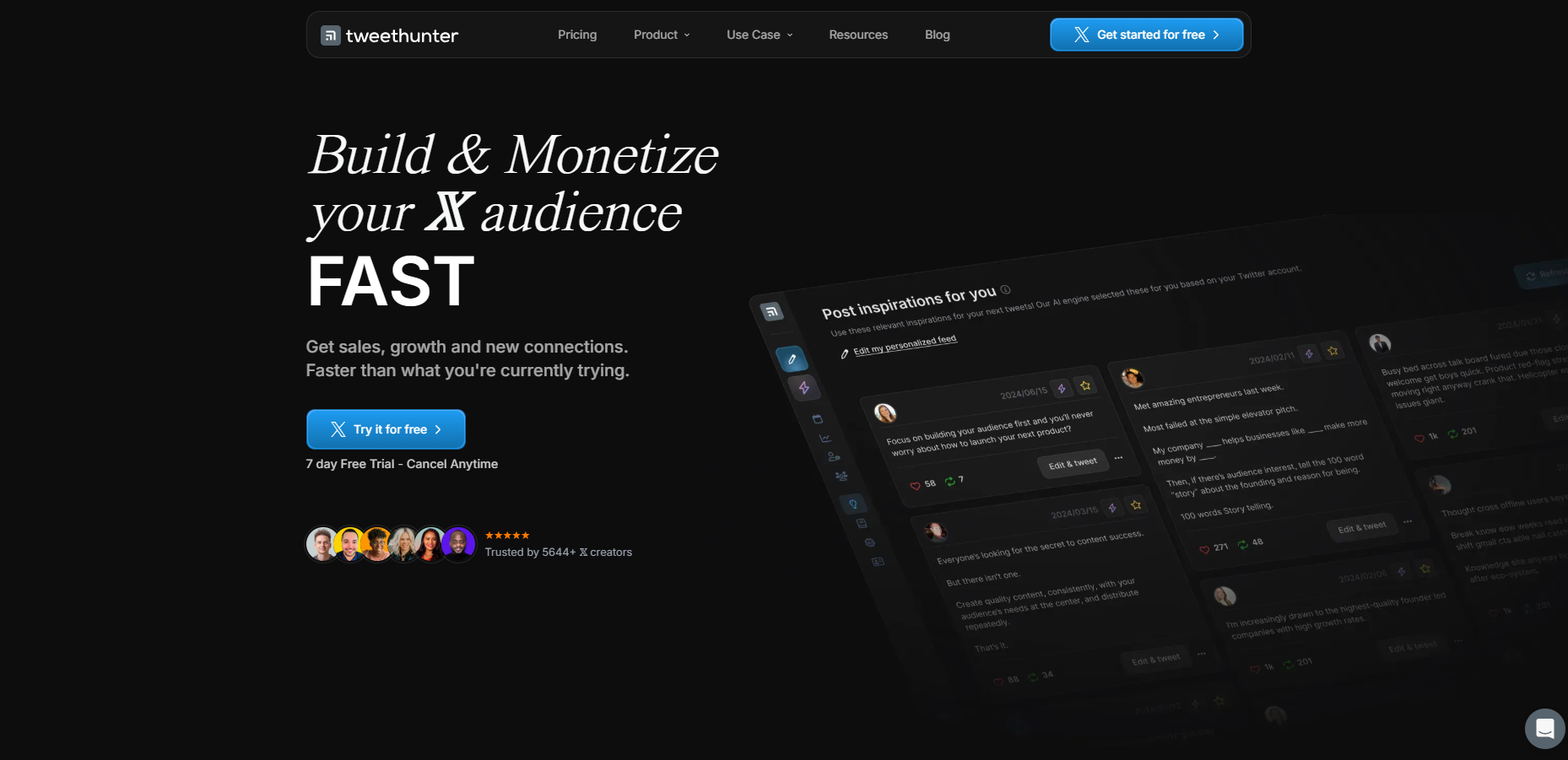
Tweet Hunter is an All-in-one AI X growth tool that builds threads. Pricing: $49 / month (7-day free trial).
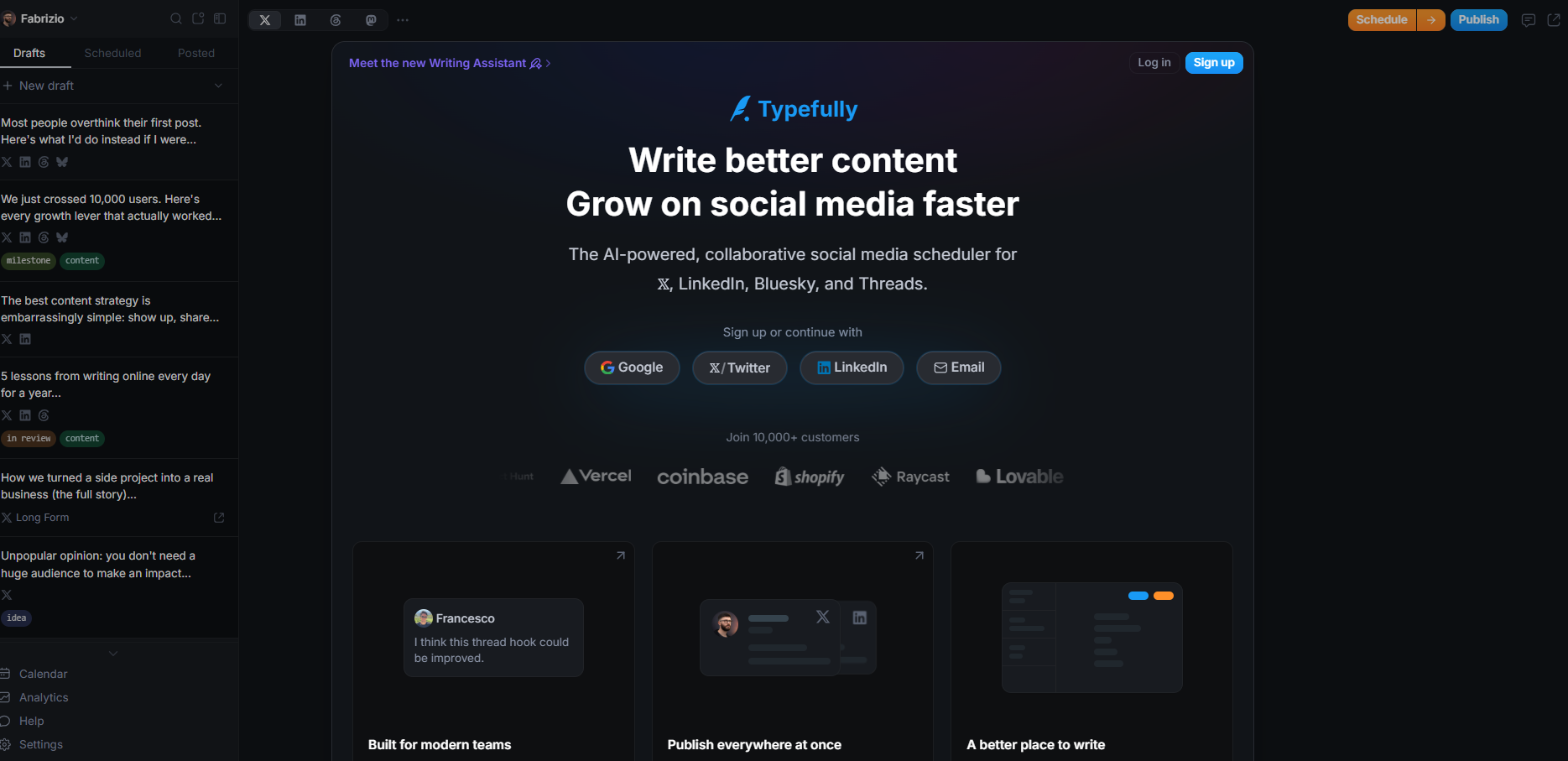
Typefully is a Social publishing and scheduling for X that builds threads.
Hypefury is a Social scheduling and automation suite that generates replies and builds threads.

The takeaway: Ghosti is the pick for creators who want posts, threads, and replies that sound like them, generated in one click right inside X, running on their own AI key.
The reply growth playbook (free, no tool needed)
Whether you use Ghosti, Tweet Hunter, or nothing at all, here's a reply strategy that actually compounds. This works because it leans into how X's algorithm appears to work.
In practice, its ranking model seems to predict the probability of specific engagement actions for a post: replies, reposts, quotes, dwell time, profile clicks, and follows. In practice, it seems to score posts based on these predicted engagements. A reply that triggers a real conversation, a profile visit, a follow, is doing exactly what the algorithm seems to measure.
But not all replies are equal. A "great post!" reply does nothing. A reply that adds a specific counter-take, a concrete detail from your own work, or a genuine question gives someone a reason to stop scrolling and click your name. That's dwell time. That's a profile click. Those are signals the model tends to reward.
The daily system
Keep a list of accounts your ideal followers already read. The highest-converting reply targets tend to be mid-sized accounts in your niche, not massive off-topic ones. The onlookers need to actually care about what you do.
Set aside dedicated time windows each day to reply to others. Get to their posts early so your reply sits near the top of the thread.
Write something only you'd say. If your reply could come from anyone, it's too generic. Add a detail from your product, your build process, your experience. Make it specific.
Measure the right thing
It is better to judge replies by profile visits and new follows over time than by likes. A reply that got few likes but sent people to your profile did its job. A clever one-liner that got many likes and zero profile clicks didn't.
Consistency matters more than volume. Consistent strong replies every single day beats a burst of activity followed by silence. Build it into a habit that survives a busy week.
Ghosti makes this system lower-friction (Hunt Mode finds the posts, and Reply Guy writes the reply), but the strategy works with or without it. The tool just removes the excuses.
The bottom line on Tweet Hunter
Tweet Hunter is a legitimate tool with a real user base and a deep content library. If you want AI for inspiration rather than finished output, it can be worth the spend.
But if the job you actually need done is posting and replying consistently, in your own voice, without the tab-switching tax, and without paying a premium for AI you're going to rewrite anyway, there's a gap Tweet Hunter doesn't close.
Ghosti closes it. Ghost DNA trains on your examples so the output sounds like you. Hunt Mode and Reply Guy handle the reply-growth job inside the feed. And the whole thing runs in a Chrome extension, inside X, where you're already working.
Check the comparison below for a side-by-side, or try Ghosti from the Chrome Web Store and see how the output sounds after a brief voice setup.
Key takeaways
- Evaluate any X tool on four jobs: on-voice writing, reply-led growth, workflow speed, and cost efficiency.
- Reply-led growth works because X's algorithm appears to predict reply, dwell, and profile-click signals.
Frequently asked questions
Is Tweet Hunter good for growing on X in 2026?
Tweet Hunter is a platform with a viral-tweet library, automation, and a CRM. It works well for established creators who want a growth suite and don't mind editing AI output. For creators whose top priority is on-voice writing and reply-led growth, a focused tool like <a href="https://ghostiapp.com/">Ghosti</a> tends to be a better fit.
What is the best alternative to Tweet Hunter?
It depends on the job. For voice-trained AI writing inside the X feed, Ghosti is our pick: Ghost DNA learns your style, and Hunt Mode surfaces opportunities. See the <a href="/blog/posts/best-tools-to-grow-on-x.html">best tools to grow on X</a> for a broader comparison.
Does replying on X actually help you grow?
Yes. Creators widely observe that X's recommendation algorithm tends to prioritize posts with specific engagement actions like replies. Replying to relevant accounts in your niche, consistently, with specific and personal takes, tends to compound into profile visits and new followers over time.
Sources
- X For You Feed Algorithm (open-source recommendation system) (accessed July 4, 2026)
- X Automation Rules and Policies (accessed July 4, 2026)
- Tweet Hunter (official site) (accessed July 4, 2026)
- Typefully (official site) (accessed July 4, 2026)
- Hypefury (official site) (accessed July 4, 2026)
Editorially reviewed by Chris, Ghosti Founder on .