

The Best
OpenClaw Alternative
for X Twitter Growth
Published · Last updated
You star the OpenClaw repository on GitHub, run the local installation command, and immediately start planning a custom AI marketing workflow. The architecture is clean, the concept of a self-hosted agent is appealing, and running models on your own machine feels like the ultimate control.
But after writing the first scripts to connect the framework to X, the actual complexity of the project sets in. You realize that turning raw infrastructure into an agent that consistently writes in your voice, handles conversational replies, and finds relevant threads to join requires prompt tuning, API integration, and ongoing maintenance. For busy founders and creators, the question changes from how to build an agent to whether building one is the most effective use of their time.
The Strategy of Reply Led Growth on X
Growing a presence on X is often misunderstood as a game of shouting into the void with standalone posts. For many creators, the most reliable path to visibility is participating in existing conversations. When you write a thoughtful comment under a post in your niche, you place your expertise directly in front of an active audience that already cares about the topic. This is reply-led growth, and it is the foundation of modern social media marketing.
This strategy is grounded in the way the platform ranks content. Creators widely observe that the open-source recommendation algorithm for X tends to predict user engagement probabilities, including likes, reposts, and clicks, to determine which posts appear in the For You feed (X Recommendation Algorithm). When a reply is detailed and interesting, it naturally captures reader attention. In practice, creators widely observe that this increased reading time, along with clicks to the writer's profile, tends to send positive signals that help the reply stand out. Creators widely observe that substantive replies tend to drive more profile visits than quick one-liners, even if those one-liners receive more likes.
To run this routine successfully, creators do not need to spend hours scrolling the timeline. A practical workflow involves identifying several accounts that share your target audience, checking their fresh posts regularly, and leaving valuable comments. Focus on mid-sized accounts where your comment can be seen near the top, and write replies that offer a unique perspective or a concrete detail. Catching the thread early, while the conversation is still live, is crucial for maximizing visibility. Over time, these daily interactions build relationships, drive profile visits, and attract followers who are genuinely interested in your work.
Track the right metrics to judge your progress. Likes on your replies are vanity metrics. Instead, monitor profile visits and follow rates over a sustained period. If you notice specific accounts starting to recognize you and reply back, your strategy is working.
What Is Required to Build a DIY X AI Agent
If you enjoy coding and want a custom setup, building a social media agent is a rewarding project. Open-source frameworks like OpenClaw give developers a local, modular engine that can connect to various services using custom script packages. To run this locally, you typically install the agent through a terminal manager, configure your model keys, and store configuration files in your local directory. If you have looked at other commercial tools, you know that they usually require moving your workflow to a separate dashboard.
However, turning a general-purpose framework into a functional writing assistant for X requires building several specialized software layers:
- Voice Training: Capturing your unique style is the hardest part of AI writing. Without a custom prompt pipeline that feeds your past examples and custom rules into the model, the agent will generate generic, robotic responses. Building a system that accurately replicates your voice requires constant testing and iteration.
- Contextual Replies: For a reply to make sense, your code must fetch the parent post, extract the context, and pass it to the model. This requires managing context windows and parsing social threads programmatically. If your agent cannot read the conversation, it cannot write a relevant response.
- Post Discovery: You need a mechanism to surface relevant posts. Building a search and filtering script to find high-opportunity accounts in your niche is its own retrieval task. Without this layer, you are still scrolling X manually to find where to reply.
- API Integration: Developers often use a wrapper bridge service like OpenTweet, which starts at $11.99 per month (or $9.99 per month billed annually) after a trial period, to handle the authentication and reduce direct platform costs.
- User Experience: Running an agent from a command line means you are constantly copying text back and forth between your terminal and browser. This extra friction makes it difficult to maintain a daily writing routine.
A self-built system is a software product. When APIs update or model behaviors change, you are the developer responsible for fixing bugs and keeping the pipeline running. For developers who want to learn the mechanics of AI agents, this is valuable experience. For creators who want to publish content, it is overhead.
Ghosti vs OpenClaw vs OpenTweet vs Typefully: side by side
Here is how Ghosti lines up against OpenClaw and OpenTweet and Typefully on the dimensions that matter for reply-led growth on X. Every competitor fact below comes from the tool's own official site.
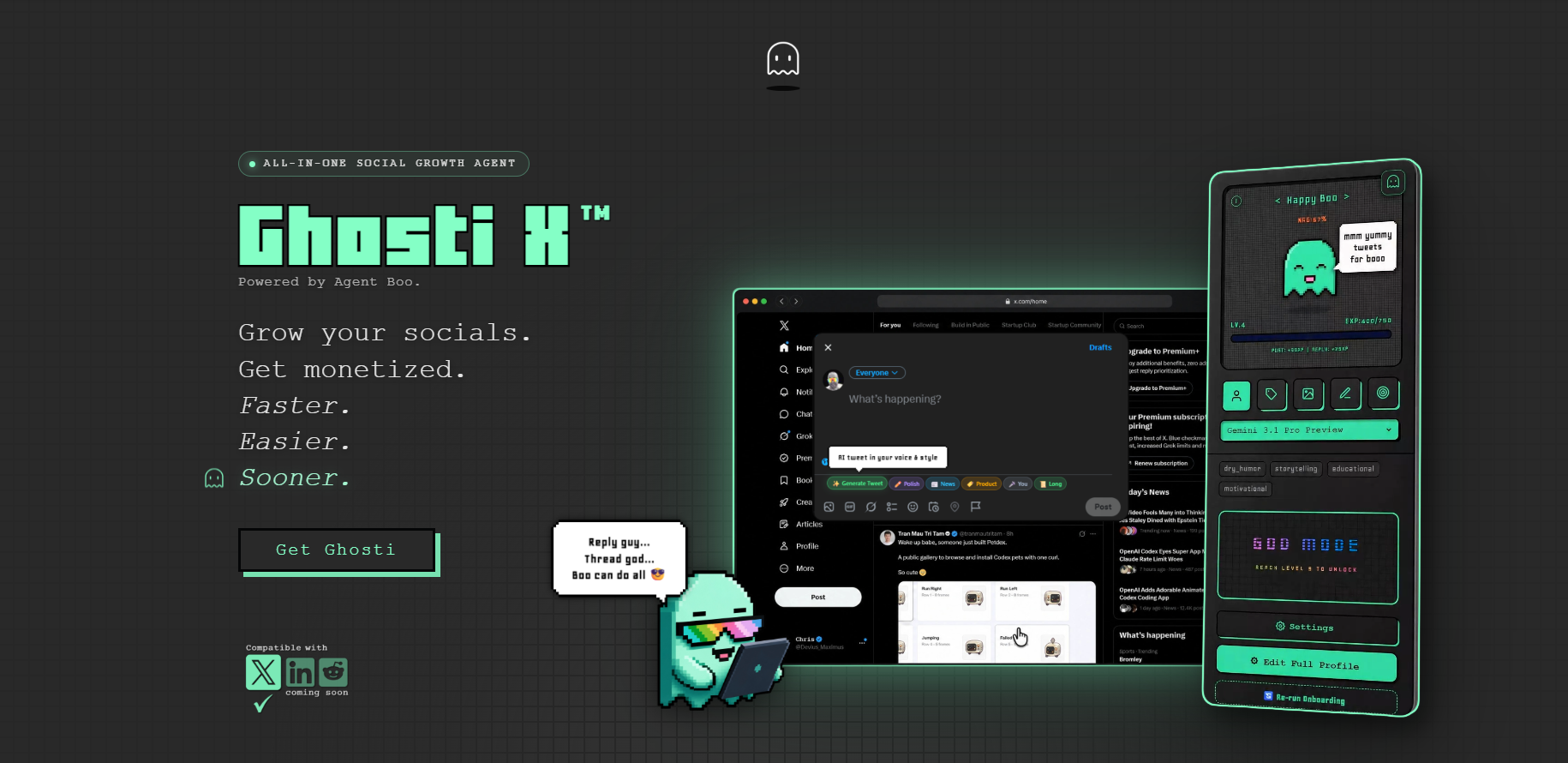
| Feature | Ghosti X | OpenClaw | OpenTweet | Typefully |
|---|---|---|---|---|
| Type | Live generation agent | Self-hosted open-source AI agent | Twitter posting API + scheduler for agents | Social publishing & scheduling for X |
| Writes in your voice | ✓ Yes, trained on your examples | — | — | — |
| Generates replies for reply-led growth | ✓ Yes | — | — | — |
| Builds full threads | ✓ Yes, Thread Studio | — | — | ✓ |
| Finds tweets worth replying to | ✓ Yes, Hunt Mode | — | — | — |
| Works inside the X feed | ✓ Yes, native in the feed | — | — | — |
| BYOK — bring your own AI key | ✓ Yes | — | — | — |
| Starting price | $18.99/month | Free (open-source, self-hosted) | From $11.99 / month (7-day free trial) | — |
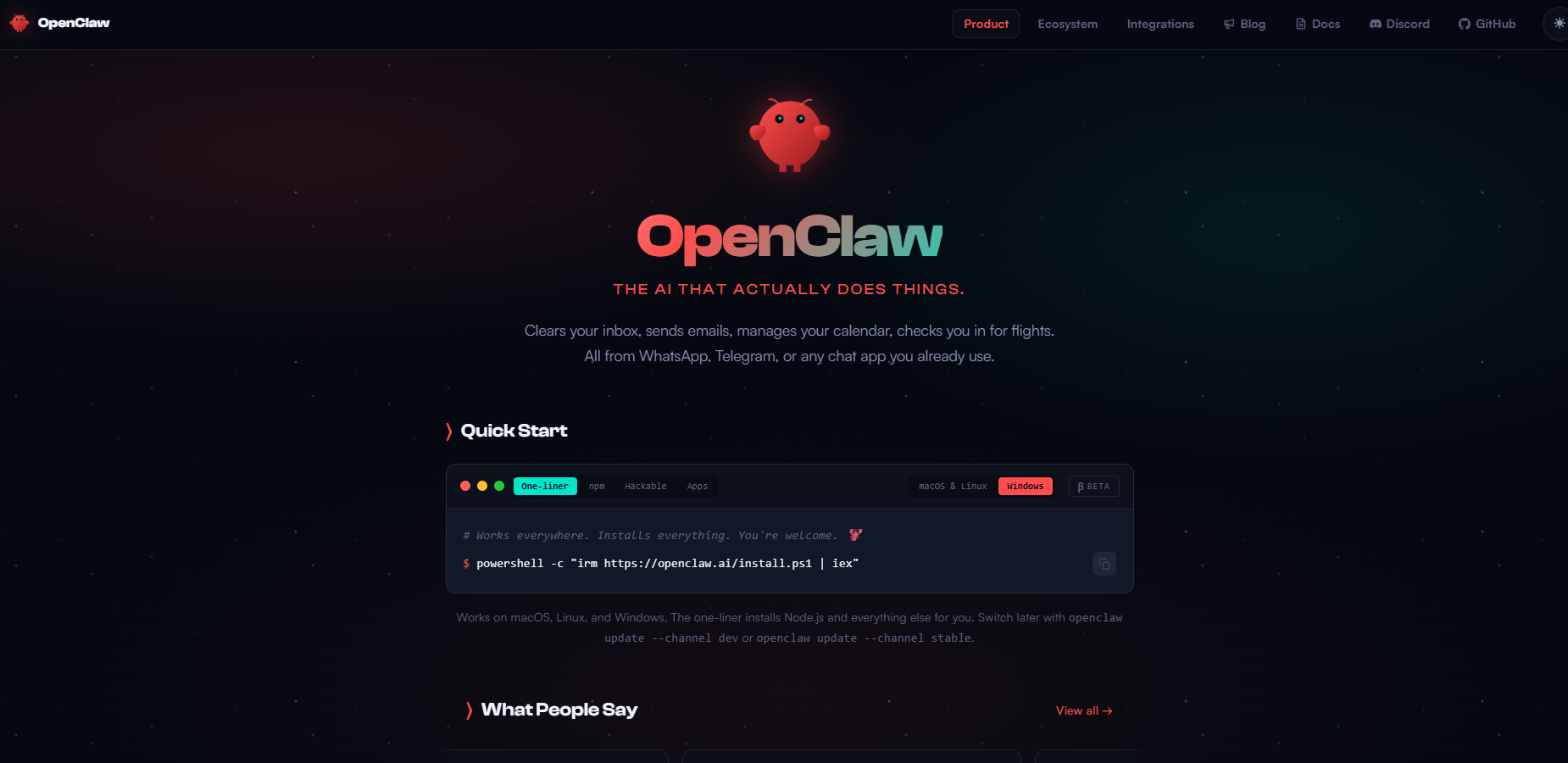
OpenClaw is a Self-hosted open-source AI agent. Pricing: Free (open-source, self-hosted).
OpenTweet is a Twitter posting API + scheduler for agents. Pricing: From $11.99 / month (7-day free trial).

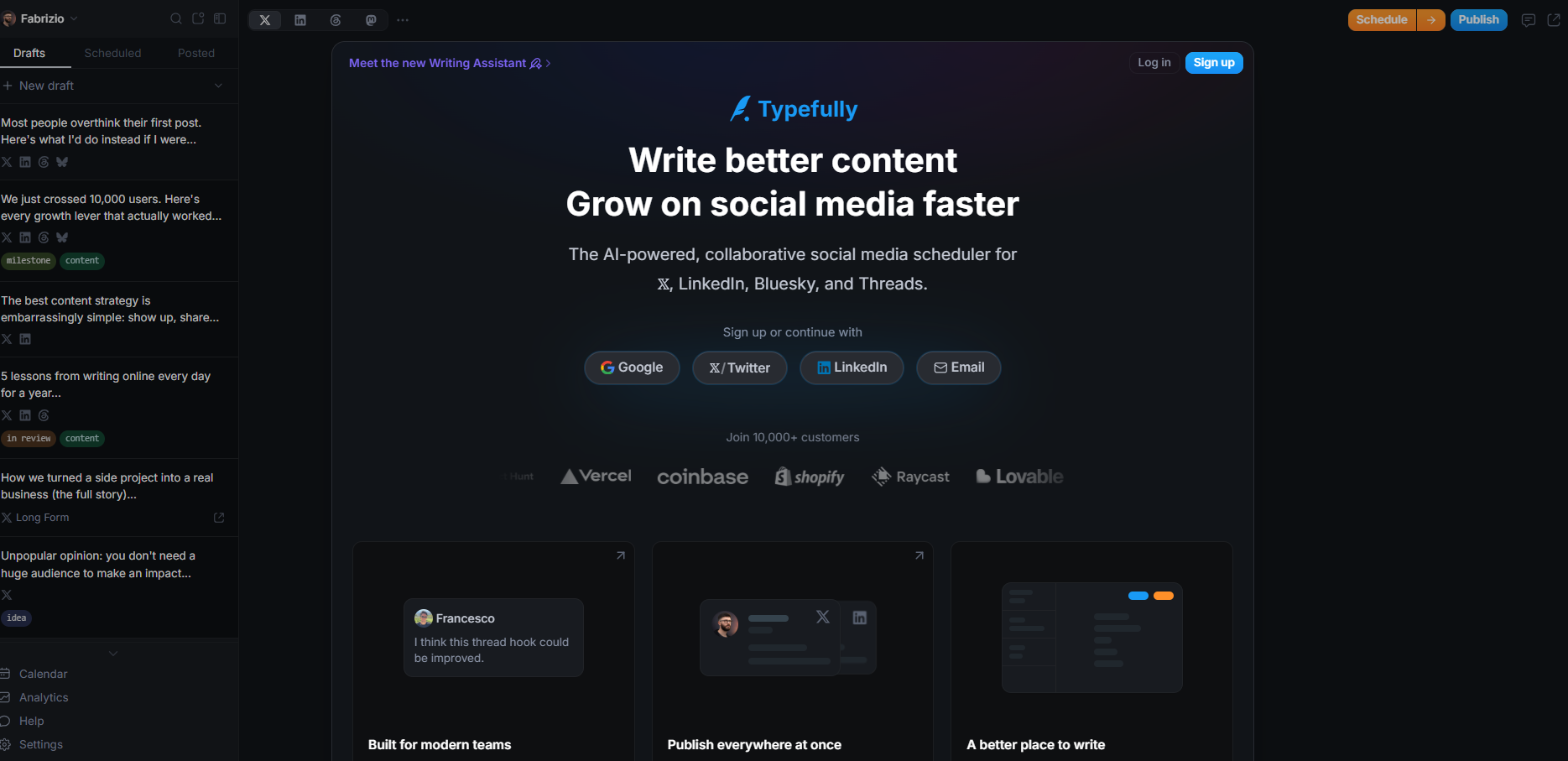
Typefully is a Social publishing and scheduling for X that builds threads.
The takeaway: Ghosti is the pick for creators who want posts, threads, and replies that sound like them, generated in one click right inside X, running on their own AI key.
Why Ghosti Is the Ready Made Alternative
For creators who want to publish content rather than build infrastructure, Ghosti is a ready-made solution. If you are comparing options for a dedicated Twitter AI agent, Ghosti is designed specifically to run inside your browser, handling the technical work of context management and post discovery.
Ghosti replaces the complex layers of a DIY agent pipeline with built-in features:
- Reply Guy: When reading the timeline, you can click Reply Guy to read the context of any post and generate a reply. It operates directly inside the compose window on X.
- Thread Studio: The sidebar contains a dedicated workspace to generate multi-part threads or write standalone posts. Thread Studio allows users to review the post count, edit the text, and copy each post of the thread in seconds to publish to X.
Because Ghosti runs as a Chrome extension, it requires no X password and makes no third-party API connections to your account, giving you control over where you work, though no tool can guarantee against suspension.
Build vs Buy: The Decision Framework
Choosing between building a custom pipeline and buying a ready-made tool depends on your main goals and technical interests. You can evaluate the options based on your priority:
When to Build: If your primary goal is to learn agent development, experiment with open-source frameworks, or customize a local scripting pipeline, building with a tool like OpenClaw is the right choice. You gain full control over the code and can wire the framework into other local databases or private tools.
When to Buy: If your priority is growing an audience, building a brand, or marketing a startup, using a dedicated extension like Ghosti is more efficient. You avoid the setup time, ongoing maintenance, and prompt tuning, allowing you to focus entirely on writing and engaging with your followers.
Infrastructure is valuable, but it is only useful if it serves the outcome you want. For creators who want to write in their own voice, inside the timeline, starting with a ready-made extension is the most direct path to consistent publishing. If you want to see how this fits into your daily routine, you can read our comparison on choosing a SuperX alternative to see how different tools handle timeline integration.
Getting Started with Voice Trained Growth
You can test a voice-trained writing routine on X without a long setup process. Getting started with Ghosti takes a few minutes:
- Install the Extension: Add Ghosti to your Chrome browser.
- Configure the Extension: Run the onboarding setup.
- Connect Your Key: Enter your API key from your preferred provider to enable wholesale generation rates.
- Start Creating: Open X and use the in-timeline buttons to generate posts.
If you prefer to focus on content creation rather than agent engineering, visit the Ghosti homepage to select a plan and start writing today. You can also explore our guide on choosing a Postwise alternative to learn more about how browser extensions compare to web-based writing dashboards.
Key takeaways
- OpenClaw is a highly customizable open-source AI agent framework, but configuring it for daily content creation on X requires significant integration and maintenance.
- Creators widely observe that a successful X growth strategy relies on consistent, high-value engagement that drives profile visits and dwell time, which in practice tend to be optimized by X's recommendation algorithm.
- Ghosti serves as a ready-made alternative that handles contextual replies (Reply Guy) and thread creation directly inside the X feed.
- The build-vs-buy decision comes down to your focus: if you want to develop AI agent infrastructure, build with OpenClaw; if you want to publish content and grow on X, choose Ghosti.
Frequently asked questions
Is Ghosti open source like OpenClaw?
No. Ghosti is a commercial Chrome extension that you install and use directly inside your browser. It does not require you to host, compile, or maintain any code.
Do I need coding skills to use Ghosti?
No coding skills are required to use Ghosti. The extension has a simple setup walkthrough that lets you connect your API key.
Sources
- X Automation Rules (accessed June 28, 2026)
- X Recommendation Algorithm (accessed June 28, 2026)
- OpenClaw Documentation (accessed June 28, 2026)
- OpenTweet (official site) (accessed June 28, 2026)
- Typefully (official site) (accessed June 28, 2026)
Editorially reviewed by Chris, Ghosti Founder on .