

OpenTweet
Alternative: From
Posting API to AI Writer
Published · Last updated
You set up a posting API. You wired it to a scheduler. You can push content to X on a timer. And you're still staring at a blank compose box every morning wondering what to say.
That's the gap nobody talks about when they compare scheduling tools. The hard part of growing on X was never publishing. It's creating content worth publishing, doing it consistently, and not sounding like every other AI-assisted account in the process. If you're searching for an OpenTweet alternative, odds are you've already solved distribution. The bottleneck sitting in front of you is creation.
This post breaks down the difference between a posting layer and a writing layer, helps you figure out which one is actually holding you back, and shows where Ghosti fits if your problem is the blank page, not the publish button.
Posting API vs Writing Agent: Why It Matters
A posting API does one job well: it takes content you've already created and puts it on X. You give it text, a schedule, maybe thread formatting, and it publishes. OpenTweet, for example, provides a REST API that lets developers and AI agents post to X without dealing with the official Twitter API's OAuth complexity.
But here's the thing most tool-comparison posts skip: the difficulty curve of X growth isn't shaped like people think. Getting a post onto X takes seconds. Knowing what to post, saying it in a way that sounds like a real person with a real point of view, doing that every single day, and actually participating in conversations that grow your reach? That's the vast majority of the work that a posting API doesn't touch.
A writing agent is a different animal. It doesn't just publish. It generates the content itself, trained on your voice, your examples, your topics. It reads the context of tweets you want to reply to and writes a response that sounds like you wrote it. It turns a half-formed idea into a full thread.
So the first question isn't "which scheduler is better?" It's: where are you actually stuck?
Diagnosing Your Real Bottleneck on X
Before you swap one tool for another, run a quick self-diagnosis. Creators who struggle to grow on X (Twitter) usually hit one of two walls, and each requires a completely different solution.
Wall 1: Distribution
You write content you're proud of, but it barely gets seen. You post manually at random times, forget to reply to comments, and have no system for repurposing content. You need scheduling, automation connectors, maybe a queue. A posting API or scheduler solves this.
Wall 2: Creation
You open the compose box and nothing comes out. You fall back on safe, generic takes because you can't find your angle. You skip days because the friction of writing feels too high. When you do use a chatbot to help, the output sounds like ChatGPT wrote it, not you. You need a writing tool that actually knows your voice and context.
Most creators who've already adopted a posting API or scheduler have solved Wall 1. If you're searching for an alternative, it's probably because the tool did its job and exposed the real problem underneath: Wall 2.
Tip: A quick test: look at your last 10 posts. If they went out on time but got minimal engagement, your distribution is fine. The content itself is the bottleneck. That's a writing problem, not a scheduling problem.
What to Look For in an OpenTweet Alternative
If you've identified creation as your bottleneck, here's a practical framework for evaluating alternatives. Not every tool needs to check every box, but the ones that matter most for consistent, on-voice growth are:
Voice training, not templates
The biggest complaint about AI-assisted posting tools is that everything sounds the same. Templates and viral-tweet libraries produce content that reads like a remix of last month's trending posts. Look for a tool that learns from your writing, your examples, your rules, and generates content that sounds like you on a good day.
Creation inside the feed
Every time you leave X to open a separate dashboard, you lose the context of what's happening in your timeline right now. The best conversations are happening in real time. A tool that works inside the feed lets you see a tweet, generate a reply, and post it without switching tabs.
Reply generation, not just posts
Many creators find that replies can help build relationships and compound their reach. Creators widely observe that replies can help boost distribution, and content that generates genuine conversation tends to get shared further. An alternative that only generates standalone posts misses the growth mechanic that compounds fastest: showing up in other people's threads.
No per-day generation caps
When evaluating tools, consider whether the pricing model places any cap on your daily output. Some tools let you connect your own AI provider API key, which can mean lower per-generation costs and more flexibility in how much you generate.
How Ghosti Solves the Creation Bottleneck
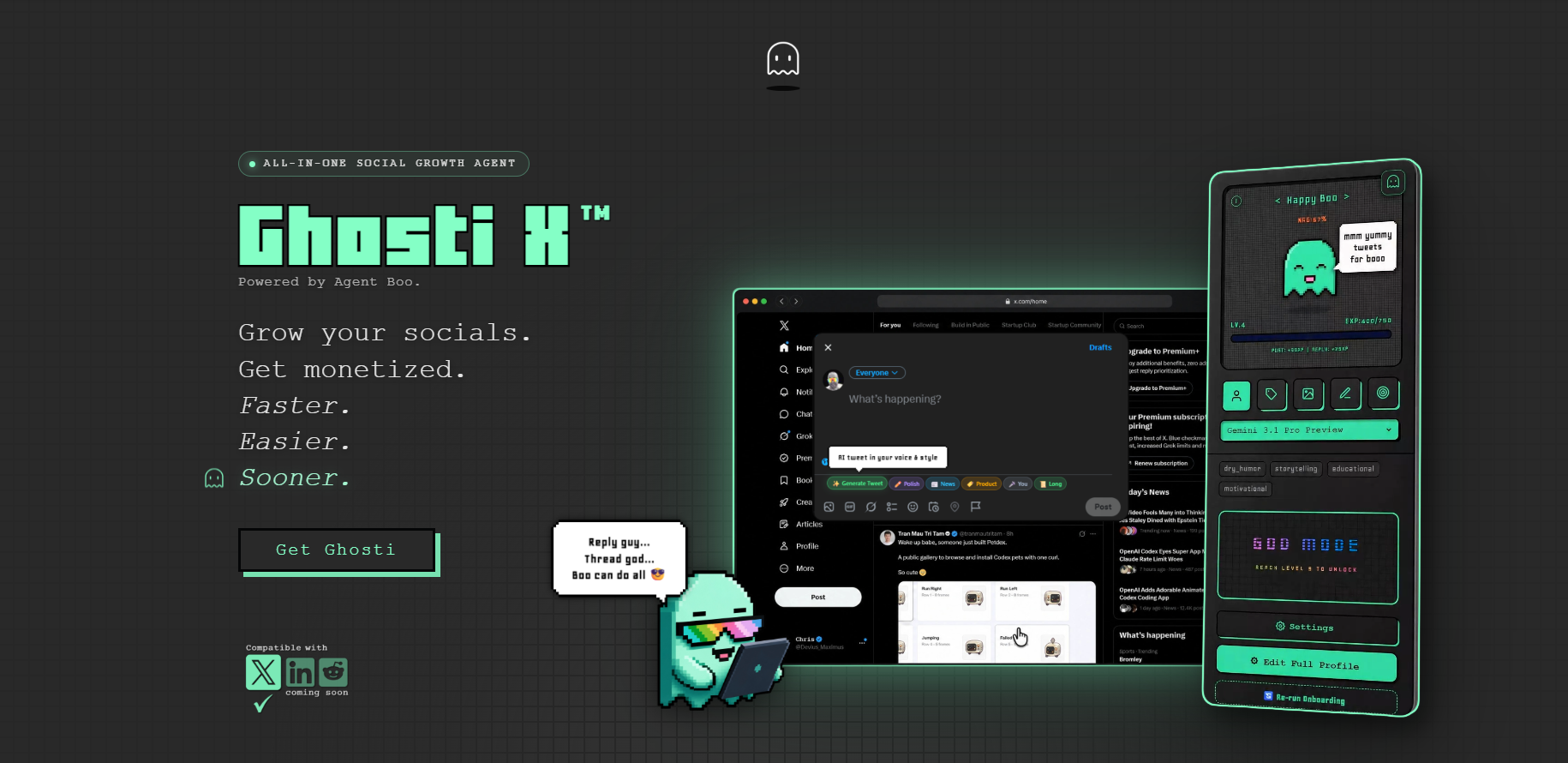
Ghosti is an AI writing agent for X that generates posts, replies, and threads in your voice, directly inside the feed. It's built as a Chrome extension (Manifest V3), so you never leave X to use it.
Where a posting API gives you plumbing, Ghosti gives you the words. Here's how that plays out in practice:
Ghost DNA captures your writing context. During setup, you provide Ghosti with your bio, interests, tone preferences, example posts, and custom rules. It uses that context to shape its output around your input rather than a generic template. The output isn't perfect every time (no AI is), but it starts from your context instead of a one-size-fits-all model.
Reply Guy and Hunt Mode handle the reply grind. Hunt Mode surfaces tweets in your feed that are worth replying to. Hit Reply Guy on any tweet and Ghosti reads the context of that conversation and generates a reply in your voice. This is the part that compounds. Consistent, relevant replies to the right people in the right threads is how smaller accounts break through, and Ghosti makes that process feel almost effortless.
Thread Studio turns one idea into a full thread. Give it a topic and Ghosti builds a multi-part thread shaped by your Ghost DNA context. You pick the post count, review each piece, and copy each part into the composer in seconds. No more wrestling with thread structure or running out of steam after the second tweet.
It all happens inside your X feed. No separate dashboard, no tab-switching. Posts and replies generate right in place: click generate in the compose box or hit Reply Guy on a tweet, and the content appears where you're already working. That small friction reduction is the difference between posting consistently and meaning to post consistently.
BYOK means no generation caps. Ghosti uses a bring-your-own-key model. Plug in your Gemini, OpenAI, Anthropic, or OpenRouter API key and pay that provider directly at wholesale rates. No daily generation limits imposed by Ghosti, and you pick the model you want. Visit ghostiapp.com for current licensing and pricing details.
And one more thing worth mentioning: Ghosti never asks for your X password and makes no third-party connection to your X account. It works inside the browser where you're already logged in.
Ghosti vs OpenTweet vs Typefully vs Tweet Hunter: side by side
Here is how Ghosti lines up against OpenTweet and Typefully and Tweet Hunter on the dimensions that matter for reply-led growth on X. Every competitor fact below comes from the tool's own official site.
| Feature | Ghosti X | OpenTweet | Typefully | Tweet Hunter |
|---|---|---|---|---|
| Type | Live generation agent | Twitter posting API + scheduler for agents | Social publishing & scheduling for X | All-in-one AI X growth tool |
| Writes in your voice | ✓ Yes, trained on your examples | — | — | — |
| Generates replies for reply-led growth | ✓ Yes | — | — | — |
| Builds full threads | ✓ Yes, Thread Studio | — | ✓ | ✓ |
| Finds tweets worth replying to | ✓ Yes, Hunt Mode | — | — | — |
| Works inside the X feed | ✓ Yes, native in the feed | — | — | — |
| BYOK — bring your own AI key | ✓ Yes | — | — | — |
| Starting price | $18.99/month | From $11.99 / month (7-day free trial) | — | $49 / month (7-day free trial) |
OpenTweet is a Twitter posting API + scheduler for agents. Pricing: From $11.99 / month (7-day free trial).

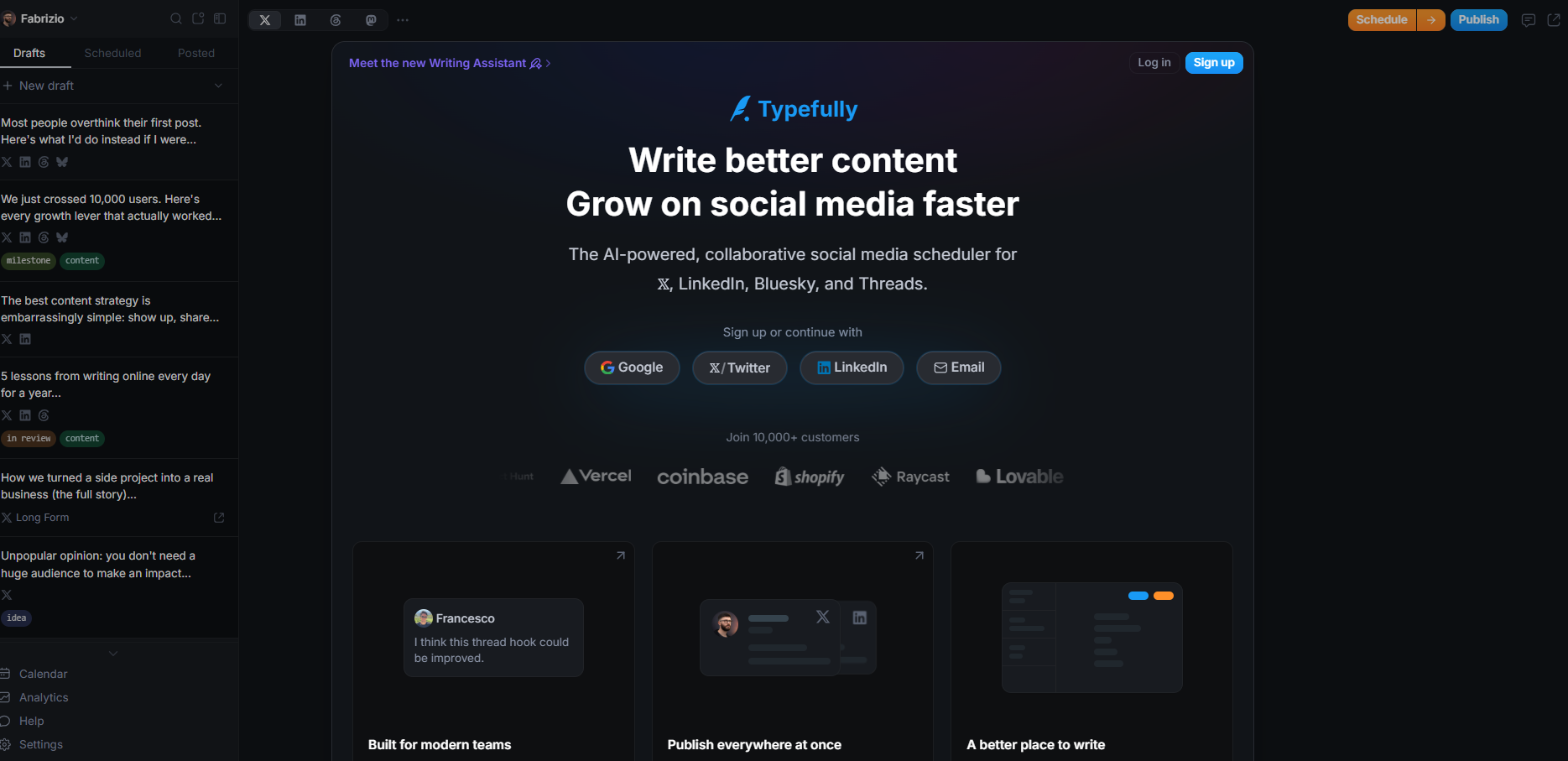
Typefully is a Social publishing and scheduling for X that builds threads.
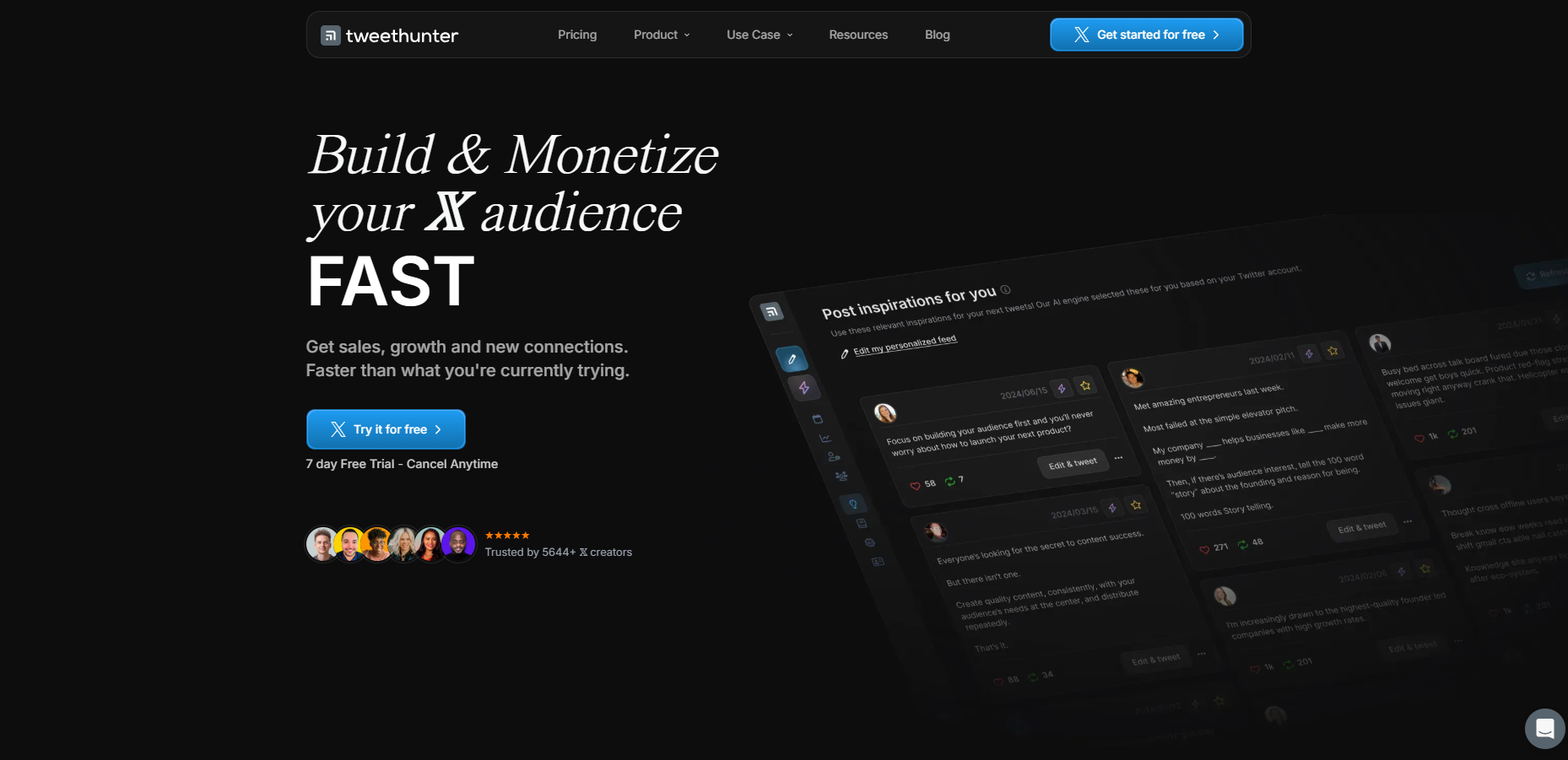
Tweet Hunter is an All-in-one AI X growth tool that builds threads. Pricing: $49 / month (7-day free trial).
The takeaway: Ghosti is the pick for creators who want posts, threads, and replies that sound like them, generated in one click right inside X, running on their own AI key.
When a Posting API Makes Sense (And When It Doesn't)
Let's be honest about what posting APIs do well. If you're a developer building a custom agent or workflow that needs to publish to X programmatically, a posting API is the right tool. It simplifies the process of connecting to X and lets your own code or automation platform decide what to post and when. That's a legitimate, useful job.
But if you're a creator, founder, or indie hacker who needs help with the actual writing, swapping one posting API for another won't change your results. You'll still be staring at the same blank page. You'll still be generating content in ChatGPT, then copying it over, then editing it because it doesn't sound like you, then giving up and posting something safe and generic.
The real shift is recognizing that distribution and creation are different problems that need different tools. You might even use both: a writing agent like Ghosti to generate the content, and a separate posting layer if you need programmatic scheduling beyond what Ghosti provides. They're not competitors. They're different layers of the stack.
A Practical Weekly System for Creation-First Growth
Here's a simple framework for creators who've solved distribution but need to fix creation. No tool required (though Ghosti makes each step faster).
- Monday: Set your 3 angles. Pick three topics or angles for the week based on what your audience cares about right now. Not vague themes, specific angles. "Why most founders quit X after 2 weeks" is an angle. "Content strategy" is not.
- Tuesday-Thursday: Reply before you post. Spend a few minutes replying to several tweets from people you want to build relationships with. Thoughtful replies to relevant threads compound faster than standalone posts. Ghosti's Hunt Mode makes this process fast and efficient.
- Wednesday: Ship one thread. Take your strongest angle from Monday and turn it into a multi-post thread. Creators widely observe that threads often get significant reach by holding attention longer. Thread Studio in Ghosti generates the full structure from a single idea.
- Friday: Remix and repurpose. Look at what performed well this week, your own posts and replies. Remix the best one into a standalone post from a different angle. This is where consistency stops feeling like a grind, you're building on momentum instead of starting from zero.
- Daily: Generate one post in your voice. Even on days you don't have a big idea, generate one post in your voice and put it out there. Consistency beats perfection. Creators widely observe that engagement signals like replies and favorites matter for distribution, and accounts that post regularly tend to accumulate those signals over time.
This system works with or without Ghosti, but each step gets dramatically faster with a voice-trained agent doing the first pass inside your feed. The human judgment stays. The blank-page friction goes away.
Why Ghosti Is Our Pick for Creators Leaving a Posting API
We build Ghosti, so take this with the appropriate grain of salt. But here's the honest case.
If your bottleneck is creation, not distribution, Ghosti is built specifically for that problem. Ghost DNA means the content starts from your voice, not a template. Reply Guy and Hunt Mode mean you're not just broadcasting into the void, you're showing up in the conversations that actually grow your account. And because it runs inside the X feed as a Chrome extension, the friction between "I should post something" and "I just posted something good" drops to almost nothing.
BYOK means you're not paying Ghosti for AI generations on top of a subscription. You bring your own key, pick your model, and pay wholesale rates directly. For creators who generate a lot of content, that adds up fast compared to tools that bundle AI at a markup and cap your daily output.
If you do need a posting API for programmatic scheduling or custom agent workflows, Ghosti doesn't replace that. It replaces the part where you're trying to figure out what to say. Different job, different tool, and you can use both.
Install the extension from the Chrome Web Store (a paid license is required to unlock full features) and see if it changes how your X workflow feels.
Key takeaways
- Posting APIs handle distribution, getting content onto X. Writing agents handle creation, generating on-voice content consistently. The first step is diagnosing which bottleneck is actually holding you back.
- If you're searching for an OpenTweet alternative because scheduling alone hasn't moved the needle, the problem is likely what you're posting, not how you're publishing it.
- Ghosti generates posts, replies, and threads trained on your voice, directly inside the X feed.
- Replies are widely observed to compound faster than standalone posts. A tool with reply generation and opportunity discovery (like Hunt Mode) accelerates the growth loop scheduling can't touch.
Frequently asked questions
Can I use Ghosti and a posting API together?
Yes. Ghosti generates the content (posts, replies, threads) in your voice inside the X feed. If you also need programmatic scheduling or automation connectors for publishing, you can use a posting API alongside Ghosti. They solve different problems: Ghosti handles creation, a posting API handles distribution plumbing.
Does Ghosti work as a scheduler or posting API?
Ghosti is a writing agent that generates content directly inside the X feed where you publish it yourself. If your main need is automated publishing on a set schedule, a dedicated tool built for that purpose may be a better fit. If creating on-voice content is the bottleneck, that's what Ghosti solves.
What does BYOK mean and why does it matter?
BYOK stands for Bring Your Own Key. In a BYOK model, you connect your own API key from an AI provider and pay that provider directly for generations, rather than paying through the tool. This can offer more flexibility in choosing your preferred AI model and may help avoid per-day generation caps.
Is Ghosti only for X (Twitter)?
Ghosti is built primarily for X (Twitter). It runs as a Chrome extension inside the X feed. If your main platform is LinkedIn, Instagram, or another network, a multi-platform scheduling suite may be a better fit. Ghosti is for creators who want to grow specifically on X with voice-trained content.
Sources
- OpenTweet (official site) (accessed June 27, 2026)
- Typefully (official site) (accessed June 27, 2026)
- Tweet Hunter (official site) (accessed June 27, 2026)
Editorially reviewed by Chris, Ghosti Founder on .